
Practice 3: Chris Adriaanse, Storytelling & Personal Narrative
In this practice, Storyteller, Chris Adriaanse, invites us to consider the stories that shape our everyday lives. Some are the stories we tell others, while others are the quiet narratives we carry about ourselves, our worries and our future. Through a series of thoughtful journalling exercises, this practice explores how writing can help us notice these stories, reflect on the ones that no longer serve us, and choose more consciously which ones we want to live under.
Combining insights from storytelling, psychology and reflective writing, Chris offers practical tools for untangling anxious thoughts, closing "open loops" and reframing worries into intentions. Rather than seeking perfect answers, this practice encourages curiosity, perspective and a greater sense of agency through the simple act of putting words on the page.
Watch Chris introduce the session
“We humans are always entangled in stories."
Phenomenologist Wilhelm Schapp
Stuck in a story
We are surrounded by stories. There are the stories we read or watch, the stories we tell others and the stories we tell ourselves.
In its simplest form, a story is something with a beginning, a middle and an end. But if a story has no ending, what happens to us?
Exercise:
1. Think of some recent examples of stories that you watched or heard that didn’t have an ending. Perhaps this was a film, something you overheard or a cliffhanger to a TV episode or series.
2. How did this make you feel? Did you enjoy this feeling or not?
Closing loops from the past
It can be a pleasurable experience to be trapped in a story without an ending. It can extend the enjoyment of the experience. But it can also be annoying or frustrating.
In daily life, there are many stories that we do not see the end of. Think of all the things that we glimpse or overhear. Snippets of conversations or things we see that will never be explained.
Another way to look at these stories without endings is to call them “Open Loops”. In psychology, an open loop is anything that causes mental, emotional or cognitive strain due to what is left unresolved, unfinished or interrupted.
So how do we close these open loops? How do we put them down and finish the story? One way is to write them down to process them.
Exercise:
1. What open loops did you experience today? Think of all the things you glimpsed. Write down anything you noticed about your environment, other people or how you felt during the day.
2. How do you feel now that these loops are on paper? Has anything shifted?
Closing loops from the future
There are also open loops about our futures. These come in many different shapes. The first one that we are going to look at is the items on your to-do list.
Let’s start by finding out what they are.
Exercise (part 1):
1. Write down everything that is on your to-do list. This can be for today, tomorrow or the coming week, whichever timeframe makes sense to you.
2. How does your list make you feel?
Now that you have a list, it’s time to explore it in a bit more detail and see if there are some loops that we can put down or close.
Exercise (part 2):
1. Make each activity on your list as specific as possible so that the immediate next step is clear e.g. “Replace the lightbulb” becomes “Buy a lightbulb” or “Fix the toilet” becomes “Call the plumber”.
2. Now review the list to identify anything that is currently out of your control e.g. a delivery. Update the list to include this as the next step e.g. “Waiting for lightbulb delivery”
3. Finally, see if there is anything that you can do to advance the things you are waiting for e.g. “Follow up with the plumber for a quote”
4. How do you feel about your list now? Does it feel more manageable?
Wayward worries
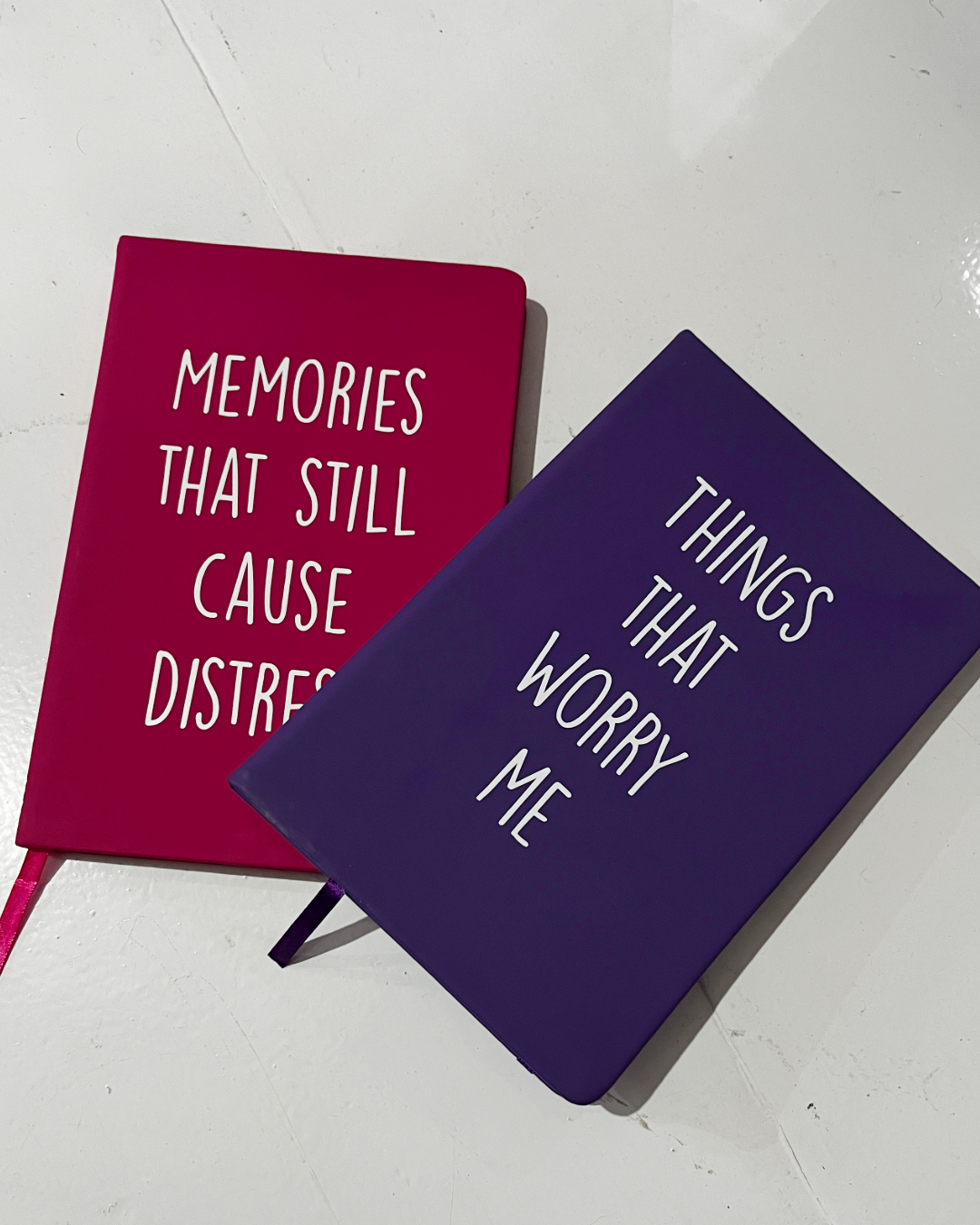
Another type of open loop that we encounter about the future are the things that we worry about. We worry about what might happen to ourselves, our friends and family, our neighbours as well as what might affect other countries or the whole world.
One way to begin to reduce the burden that worries can place on us is to write them down. Brain research has shown that writing down worries can reduce the signal in the brain that is associated with negative thoughts.
We will explore worries through several exercises, but let us start by naming them and writing them down. This alone can help you feel better and therefore more prepared to face whatever life might throw our way.
Exercise:
1. Write down a list of your worries. This can be about anything you want, big or small.
2. Reflect on the process. How do you feel? Did it bring you any relief?
Circles of concern
Worries come in all different shapes and sizes so this next exercise is about understanding the different types. It is based on the work of American educator and author Stephen Covey and his Circles of Concern. It divides things up into three parts:
- What we can control (Circle of Control)
- What we can influence (Circle of Influence)
- What we cannot control (Circle of No Control)
The things we can control
There are many things in life that we can control. This is our personal domain. For example, we can choose which clothes we put on in the morning or what we eat for breakfast. These are typically things that we can also more easily change if we want to e.g. buying something new to wear or finding a new breakfast recipe to follow.
The things we can influence
Beyond the sphere of what we can control are the things we can influence. This is usually about those around us such as our friends and family. Sometimes we try to control them, but often we do much better by influencing them instead. For example, what a family member does about their health or where you meet friends for dinner.
The things we cannot control
Finally, there are the things that we cannot control, for example, global political events or the weather.
Life does not always fit into these categories neatly. For example, our health is often at the same time under our control, under our influence and beyond our control depending on our circumstances or the specifics.
Different days can also change our ability to influence something. For example, if we are following a specific eating regimen, this can be easy on some days (Circle of Control), harder but possible on others (Circle of Influence) and sometimes we fail completely and reach for the cake (Circle of No Control).
Let’s look at where your worries sit.
Exercise:
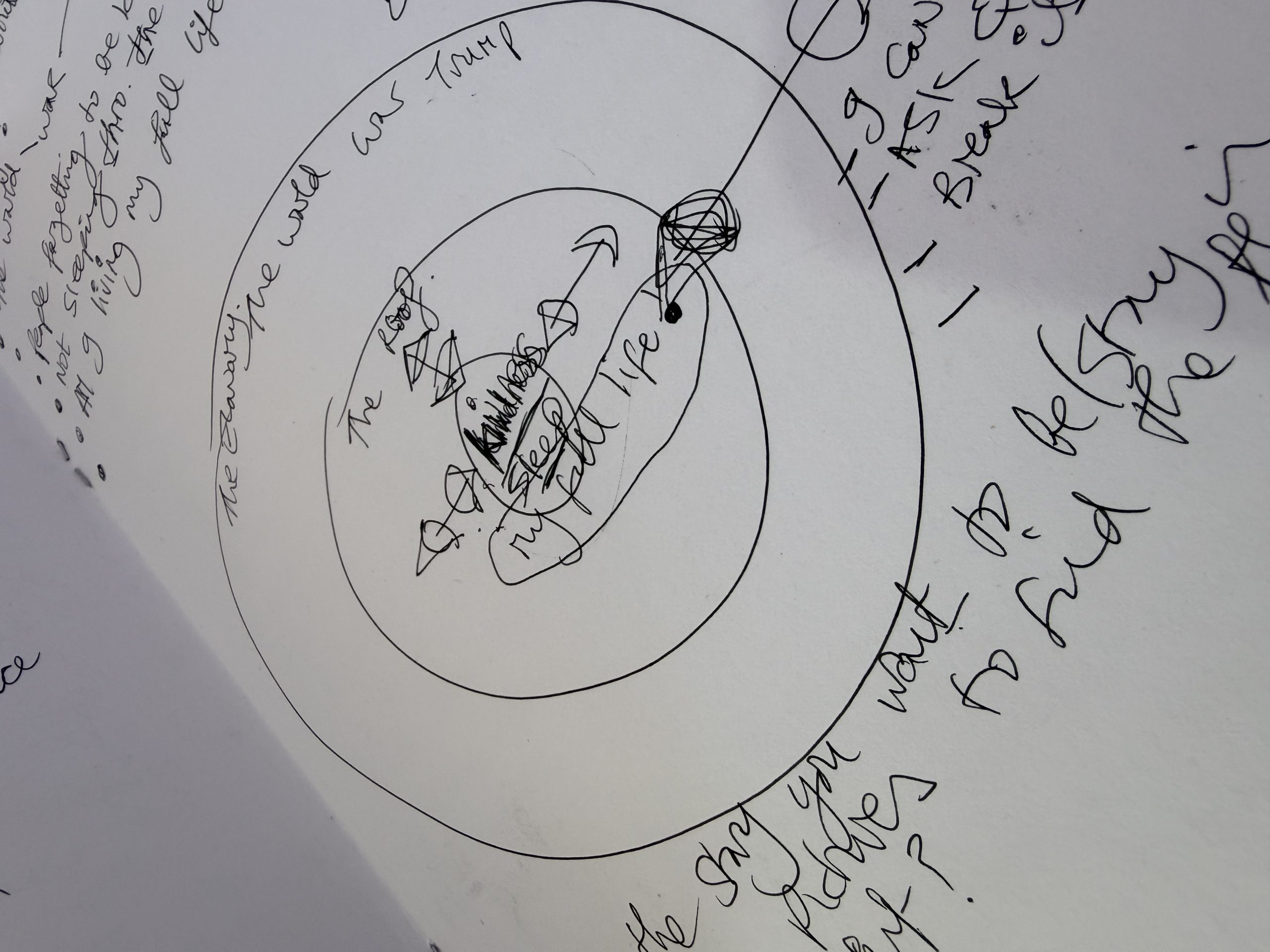
1. Draw three circles inside each other. The smallest, innermost circle is the Circle of Control. The middle one is the Circle of Influence and the outer one is the Circle of No Control.
2. Now place each of your worries inside the appropriate circle. What does this tell you about them? Do you feel differently about any of them?
Wish not worry
The final exercise we will explore is the images that these worries create in our minds.
Our brains are fascinating things. If I ask you NOT to think about something, your brain will create the image or experience regardless. It is not possible to think in negatives.
For example, if I ask you NOT to imagine a small stream, NOT to picture yourself walking through it on a summer’s day, NOT to feel the cool water on your feet… it is not possible.
Thinking about our worries for the future, there is a huge difference between imagining something that you don’t want to happen versus something that you do want to happen.
Our brains also find what we look for. If I ask you to look at all the red objects that are around you, then they will all suddenly jump out. You might have never noticed them before. In psychology we call this confirmation bias.
Let’s explore this final idea in an exercise.
Exercise:
1. Take your list of worries from the previous exercises. See if you have written any negative statements about NOT having something occur. Pay attention to the images contained within these words. Are these the things that you want to give time and energy to?
2. Now see if you can invert any of these images to focus on what you do want e.g. keeping flexible and mobile rather than losing independence; or imagining someone being in good health rather than worrying about someone’s health condition worsening.
3. Rewrite the list of worries to reflect the things that you wish for instead, focusing on imagining what you would like to happen or what you would like to achieve.
4. Finally, how do these new images make you feel? Can you feel any shift or change in perspective in how you relate to them?
Think about this in your daily speech as well. State what you wish for rather than what worries you. For example, avoid saying “I think I’m coming down with something…” but rather say “I am fighting off a cold…”.
Final reflections
Stories are powerful things and to be stuck in a story need not be a bad thing. What is important though is that we choose which stories we want to be stuck in.
Through simple exercises, we have looked at ways to put some of these stories down and to close some of the open loops that we find in our daily lives.
Paying attention to our worries and our capacity to influence them can help us bring positive action to our lives. Even if something feels beyond our control, we can look for even the smallest thing that is within our Circle of Influence that can make a difference.
Focussing on what we would like to happen, rather than what might happen, can give us a fresh perspective and appreciation, and research suggests that this can also help us to live healthier and happier lives.
So with all this in mind, what one thing from these exercises will you put into your daily life to help you choose which stories you want to live under?
Further Reading
For more information and inspiration, check out some of the following:
The 7 Habits of Highly Effective People by Stephen R. Covey
Don't Think of an Elephant: Know Your Values and Frame the Debate by George Lakoff
Reframe Your Brain: The User Interface for Happiness and Success by Scott Adams
A Garment for the Moon by Shonaleigh
Chris Adriaanse is a storyteller working in the oral tradition. He tells a wide range of folk and fairy tales to people of all ages. His storytelling has been described as “magical” and “inspiring”. He began his career as a scientist and worked as a medical writer after completing a PhD in chemistry. He is captivated by the power of stories to take us into the unknown and as containers where difficult questions can be asked.
www.chrisadriaanse.co.uk | @christhestoryteller
If you've enjoyed our Present Page series, consider donating
The Present Page was created by Berwick Literary Festival and Anna Chapman Parker with funding from Create Berwick, Northumberland County Council and the North East Combined Authority, enabling us to offer these workshops free of charge.
If you've found this series enjoyable and would like to support more creative opportunities like this in Berwick and beyond, we'd be very grateful for a donation of any size.
Every contribution helps us develop new workshops, commission artists and writers, and create free resources that connect more people with stories and creativity.

