
Practice 4: Lucy Baxandall, Journalling & the Book
In this practice, artist and papermaker Lucy Baxandall, invites you to create a journal that is as individual as the thoughts it will hold. Through simple bookbinding techniques, you'll make a handmade journal with pockets, folded pages and space to collect writing, drawings, keepsakes and memories, creating a book that can grow alongside your own creative practice.
As you make your journal, Lucy reflects on how the physical act of creating a book can foster a deeper sense of connection with the creative process itself. Rather than simply choosing a notebook from a shelf, you'll create a place that feels uniquely your own: a welcoming home for ideas, observations and the small details of everyday life. Whether you use it as a journal, sketchbook, travel diary or creative scrapbook, this practice celebrates the book as both an object and a companion to reflection.
Watch Lucy introduce the session
Introduction
Whether your journal is just for you, or whether it is meant for others to read and look at too, your words (and perhaps also pictures and ephemera) need a home. Whether your journal is more planner or literary diary, your thoughts need somewhere to land, and that surface can make a big difference to how you feel about documenting your days.
Over the last quarter century or so, our world has opened up, for better or worse, via the internet. People are sharing art, music, and many other forms of creativity, in astonishing quantity and variety. Sketchbooks and journals, once often (though not always) private, have evolved into vehicles for very public self-expression. ‘Art journalling’ is now very much a thing!
Sometimes a simple blank notebook/sketchbook is quite sufficient, and even desirable if you want to work without distractions. I often use them myself – the ones locally made by Pith in Spittal have great quality paper and they have a planner version with more structure too.
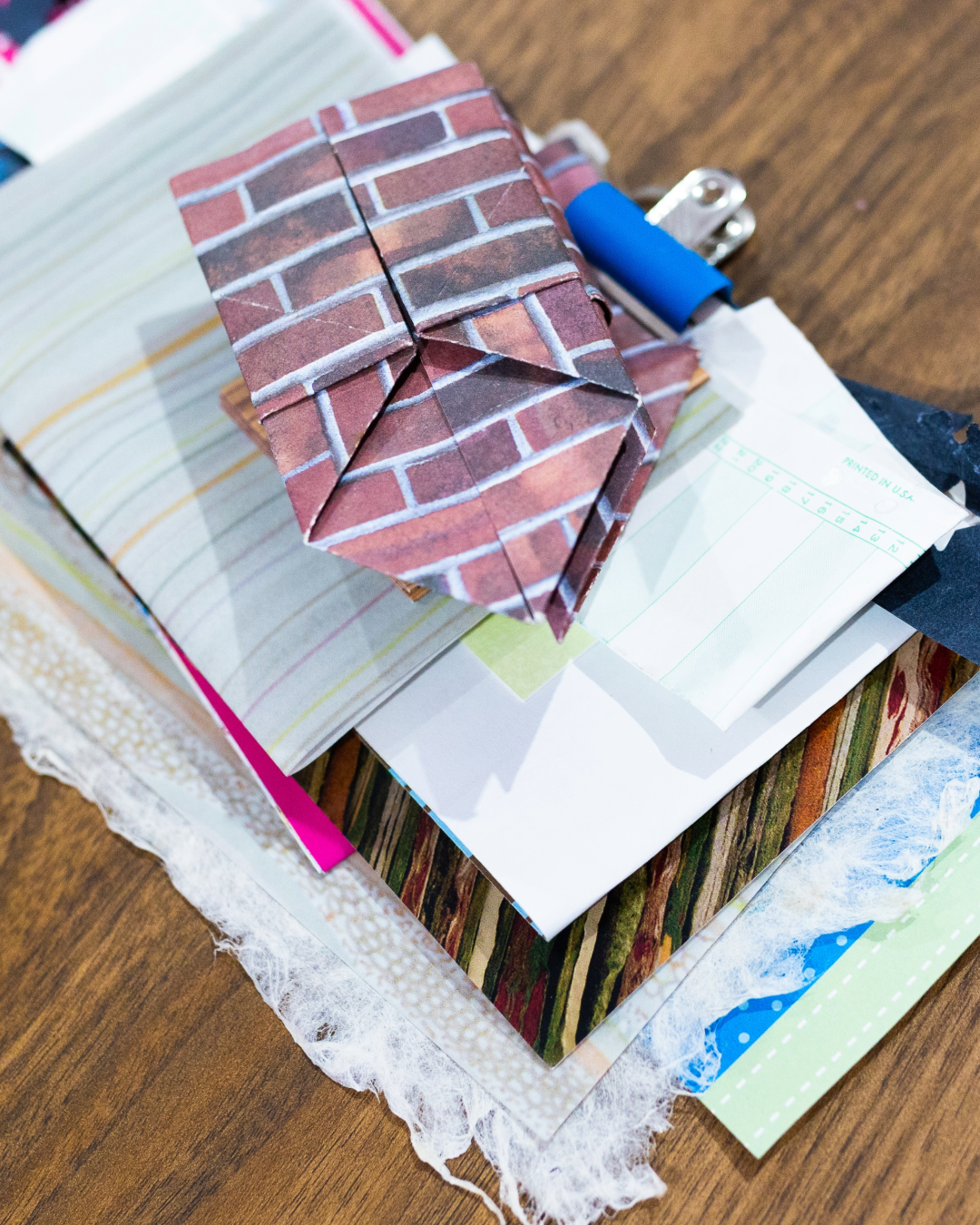
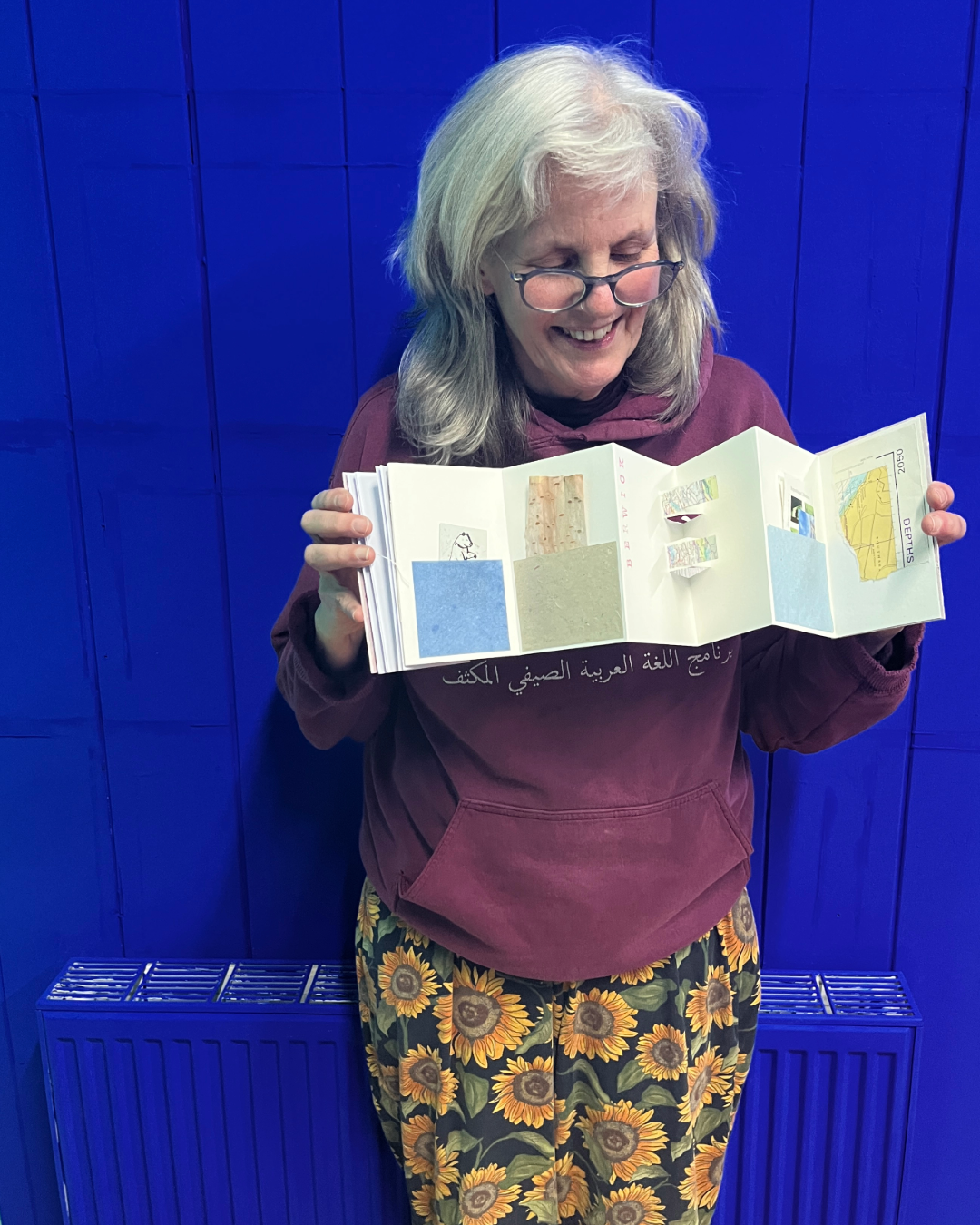
However, the book we are going to make here is a bit different. It started out as a language journal that I sent out in kit form with a group of secondary school students going on a foreign language exchange. I had found, while teaching languages to primary school students, that making their own vocabulary books gave them a sense of ownership of their writing surface and made them more enthusiastic about recording their newly learned words. The exchange trip version was a more complex variation with pockets to store tickets, napkins and other souvenirs, all in a compact size that made it easy to carry around, great for holidays. So that’s our starting point, and you can customise it in any way that suits you.
I see my journals as a house with different rooms that I can wander and feel safe in, and I hope you will find a welcoming home in yours as well.
Making your journal
These instructions will make a small journal 10cm high, but you can adapt the size as needed.
Materials
- 10 sheets of A4 printer paper – white or colours of your choice
- 1 sheet of A1 130gsm cartridge paper (will make up to 4 books)
- Thick paper or card for covers
- Decorative papers for collaging, rubber stamps etc (optional)
- Glue (stick or PVA), or narrow double-sided tape
- Needle and strong thread
- Ruler
- Scissors
- Paper cutter/guillotine (optional: alternative is scissors or craft knife + ruler)
- 50cm length of flat ribbon (optional)
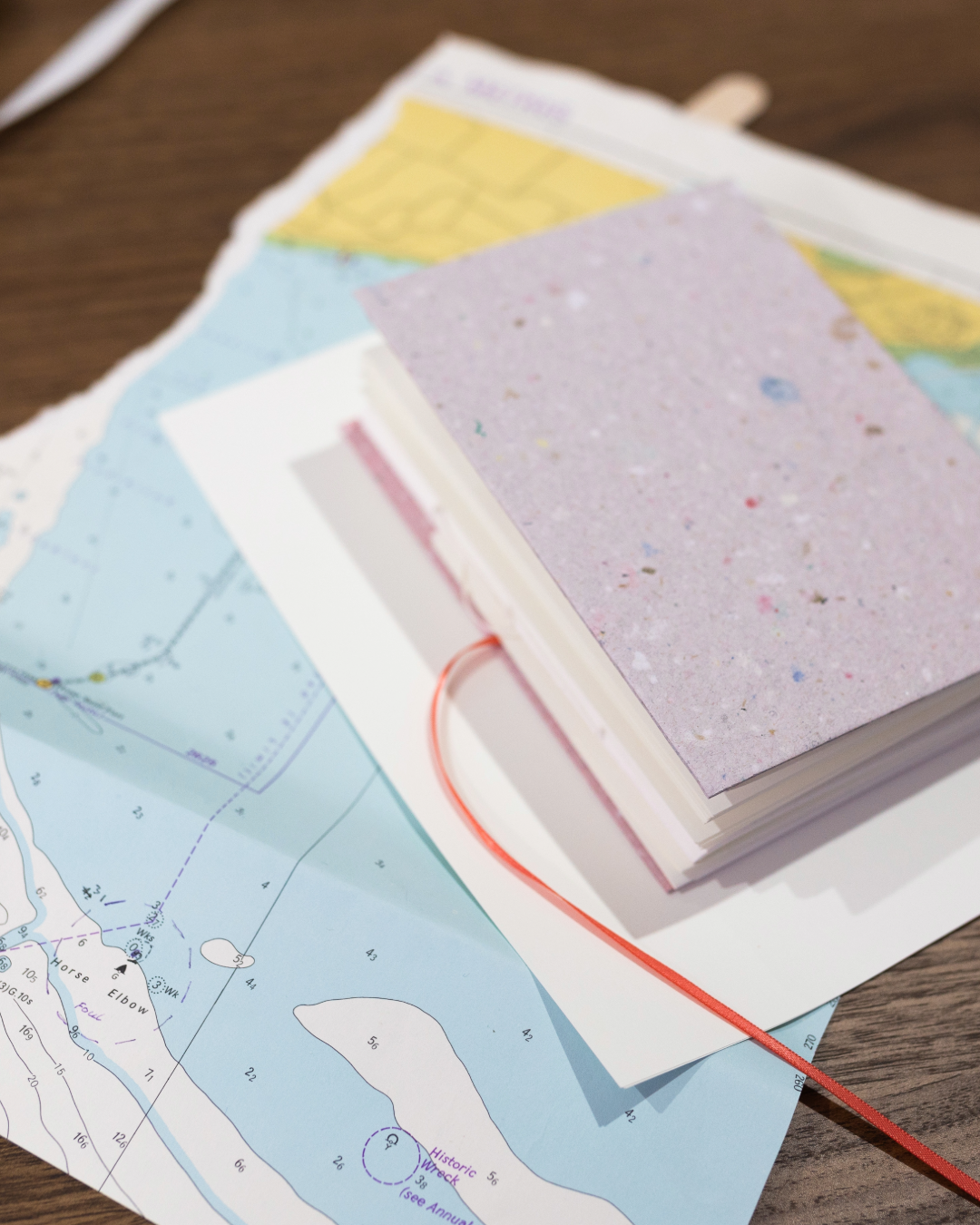
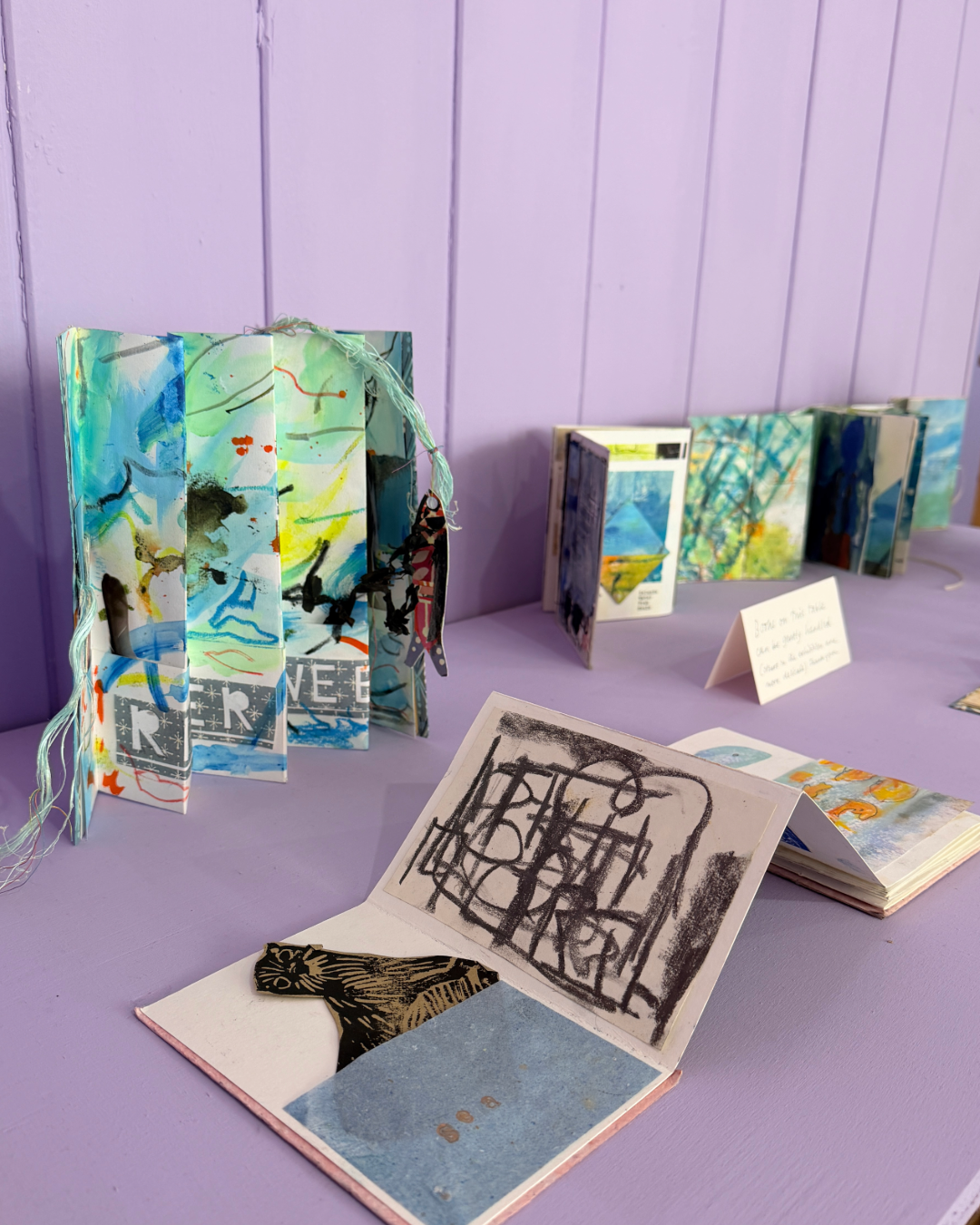
Construction
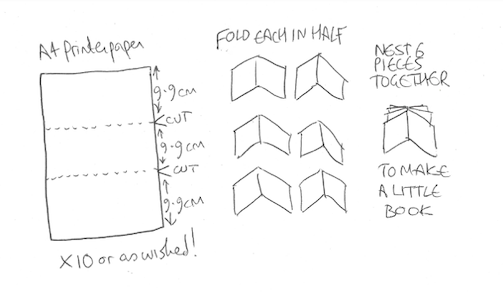
First, prepare your paper. Using a paper cutter/craft knife, cut your A4 printer paper sheets into 3 equal pieces widthways, giving you pieces that are 99mm high and 210mm wide.
Cut your A1 sheet of cartridge paper into 4 equal pieces lengthways. This should give you pieces that are 150mm high and 840mm wide. You will only need one for each book.
Fold your pieces of printer paper in half widthways – each little notebook section will need 6 pieces, and you can include one or more of these sections, so your 10 sheets will make up to 5 sections.
Prepare your sheet of cartridge paper as follows:
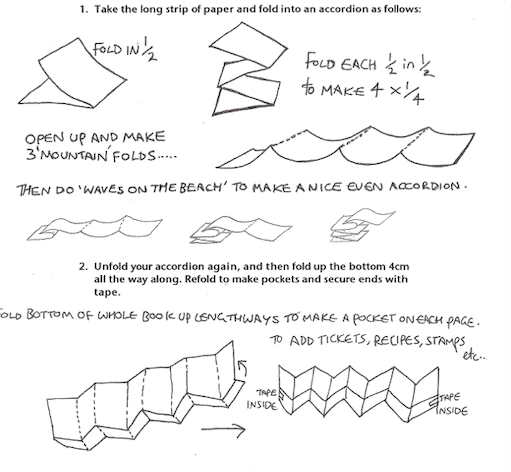
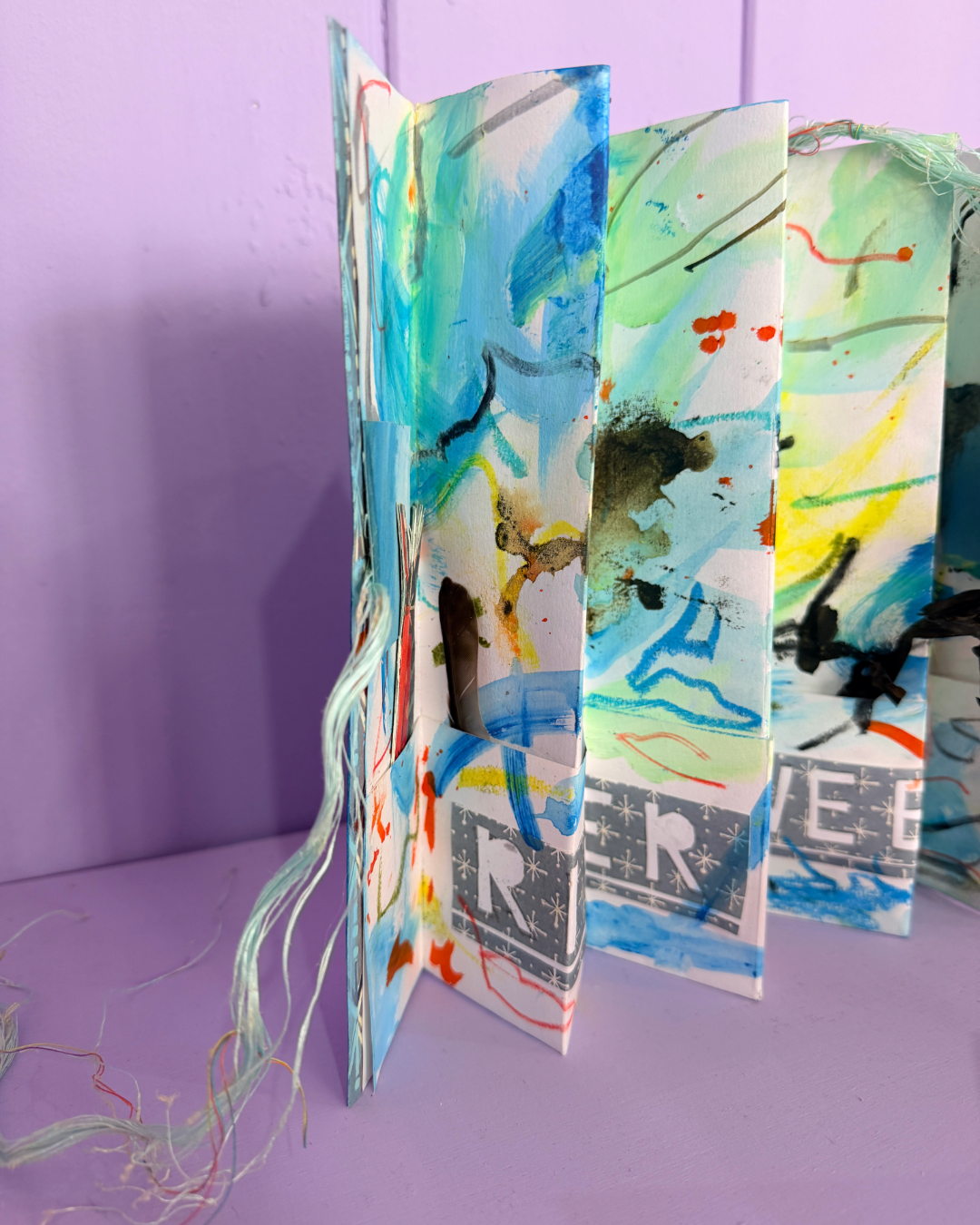
Straighten the accordion out flat on the table, measure 10cm up from the bottom of each short end, make a pencil mark and carefully fold the paper up lengthwise to meet these marks at either end, forming pockets.
Use glue or double-sided tape to secure the pockets at each end of the concertina – the folds will hold all the other pockets in place!
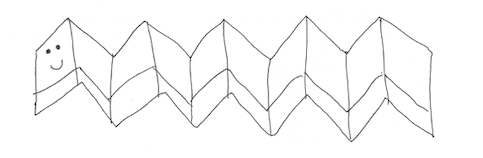
Now you can sew your notebook sections into your accordion book.
Gather up your little printer paper books.
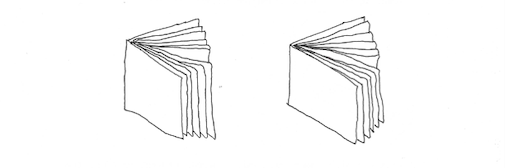
If you add two sections, it will look like this from above:
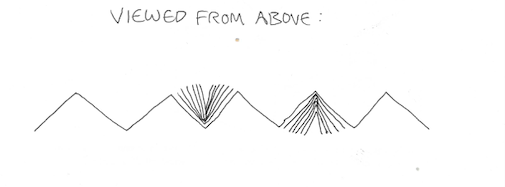
You can add as many or as few sections as you like, on one or both sides of the accordion.
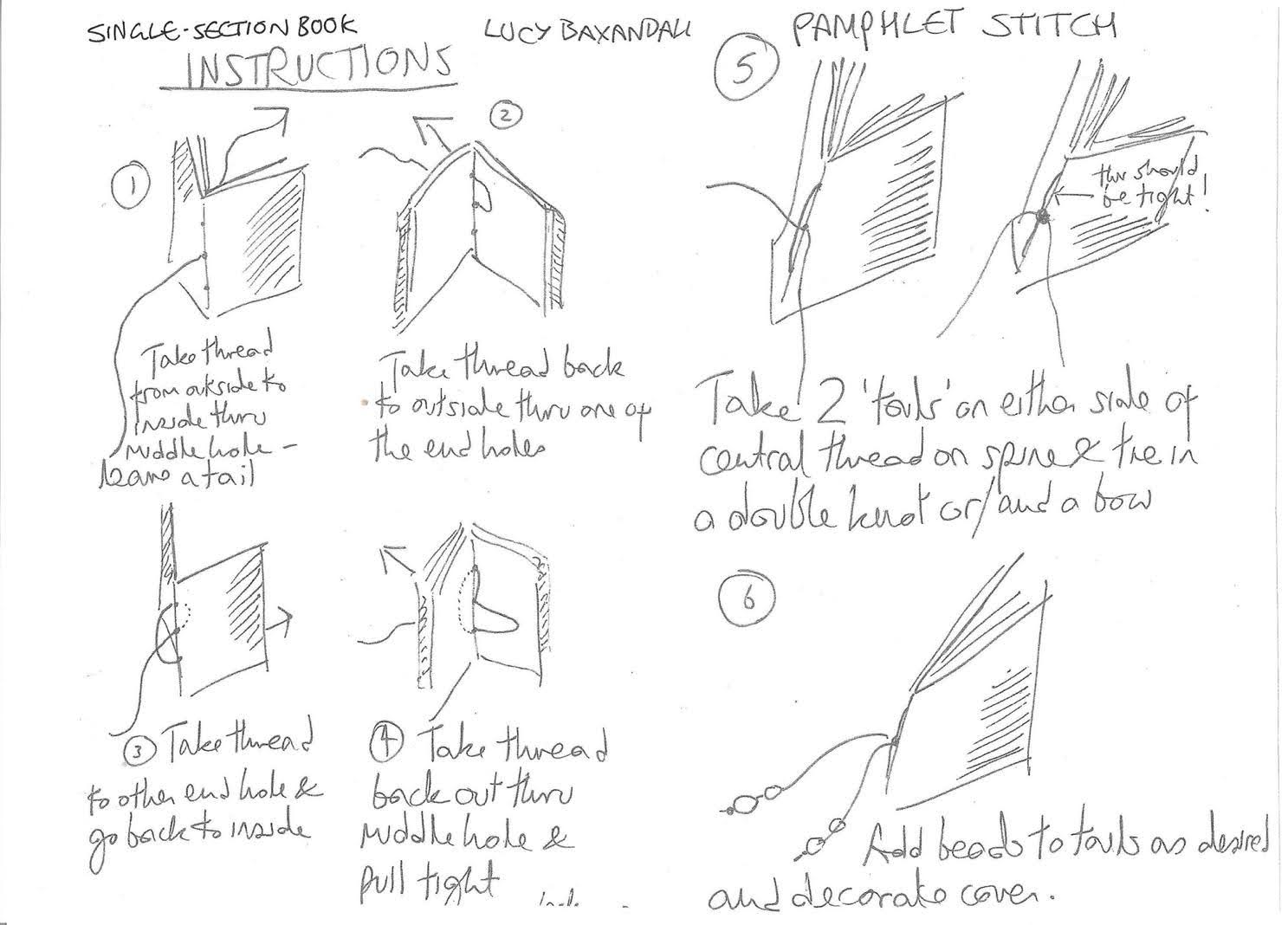
Using your needle and strong thread, use this pamphlet stitch method to sew your sections into the folds. Pierce three equidistant holes in the fold and the book section with your needle first. If you want to add beads to the threads, leave the tails long. If not, snip them off leaving a centimetre or so of thread.
Once you have the basic structures, you can try out all sorts of variations. If you don’t want pockets all the way along, leave out the lengthways pocket fold and try these instead. If you still want to add notebook sections, leave enough folds plain to accommodate them.
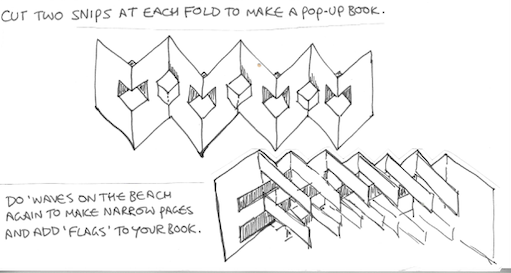
If you don’t fold the pockets your book will be taller, so for matching notebook sections, cut your printer paper in half instead of in thirds.
Now you can add your covers. If you have made books before, you’ll know that it is preferable for all the papers you use to have the paper grain running vertically – this is already the case in the papers you have already used because of how they are manufactured and cut. Paper and card will usually flex/bend more easily in the direction of the grain. Many handmade papers don’t have a distinct grain so you can use them in either direction. Don’t stress about this too much! If the grain runs horizontally, you may just find that the opposing grain directions cause your covers to twist a bit. You can cut your board or thick paper either the same size as your pages or a bit wider to leave a turn in – that’s obviously easier with paper.
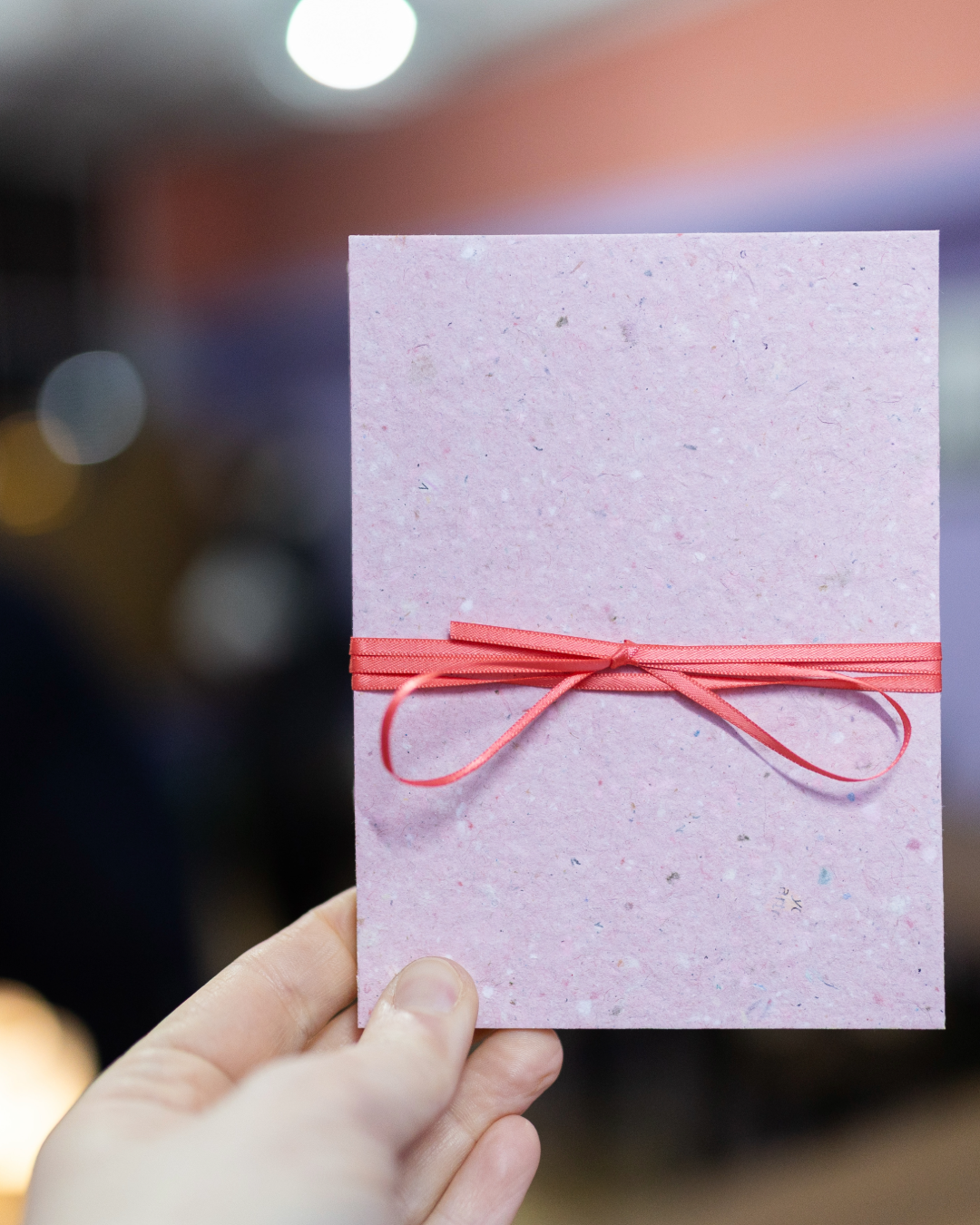
Glue or tape the paper to the outside end pages, sandwiching your piece of ribbon under one of the covers. The ribbon can run horizontally or vertically:
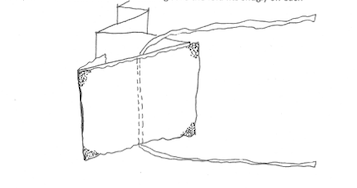
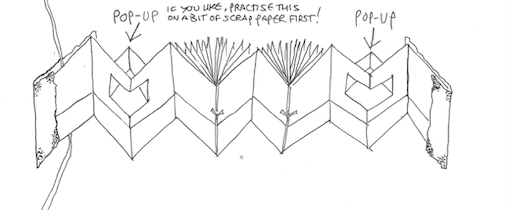
Once your book is done, you can add to it in any way you like, with collage, rubber stamps, or just your own carefully chosen words and drawings. You could make a book for each holiday or trip you take, or to document an important work project or family occasion. It could also be a special gift.
Some links for further inspiration
Pith Supply Notebooks:
https://www.pithsupply.com
Diary of an Artist in Lockdown (a friend in London):
https://www.inkpotandpen.com/portfolio/thediary
Country Diary of an Edwardian Lady (a classic example of an illustrated journal):
https://www.theartyologist.com/the-nature-notes-country-diary-of-an-edwardian-lady-books/
Art Journalling:
Lucy Baxandall is a papermaker and book artist based in Berwick-upon-Tweed, Northumberland, and in London for teaching. She has worked as a financial journalist, jewellery designer/maker, translator and teacher of French, German and art in the UK and the USA.
From 2008 to 2010, she was artist in residence at John Mason School in Abingdon, Oxfordshire, and remained at JMS as an art teacher until 2011.
After returning to London from Oxford, she taught at the London Centre for Book Arts, and now teaches 2D and 3D papermaking at Morley College and West Dean College. She also runs papermaking and book arts workshops for groups and individuals at her studio in Berwick and around the UK, and occasionally translates for academic publications.
The move north in 2018 has allowed her to open a bricks and mortar shop, Tidekettle Paper, alongside her studio at 16 Bridge Street, Berwick.
lucybaxandall.com/cv/ | @tidekettle
If you've enjoyed our Present Page series, consider donating
The Present Page was created by Berwick Literary Festival and Anna Chapman Parker with funding from Create Berwick, Northumberland County Council and the North East Combined Authority, enabling us to offer these workshops free of charge.
If you've found this series enjoyable and would like to support more creative opportunities like this in Berwick and beyond, we'd be very grateful for a donation of any size.
Every contribution helps us develop new workshops, commission artists and writers, and create free resources that connect more people with stories and creativity.

