Practice 2: Kate Temple, Drawing with Mind & Body
In this practice, visual artist, Kate Temple, invites you to approach drawing not as a skill to master, but as a way of paying attention. Through a series of simple, playful exercises, you'll explore how making marks on the page can help quiet the mind, connect you with the present moment, and encourage curiosity about the world around you.
Using everyday objects, repeated patterns and gentle observation, Kate encourages us to let go of ideas of "good drawing" and instead discover drawing as a regular creative practice that can be both grounding and generative. Whether you're completely new to drawing or have an established practice, these exercises offer an opportunity to slow down, notice more closely, and enjoy the process of making.
Watch Kate introduce the session
Introduction
This practice will consider how drawing can be a regular wellbeing practice that can be relaxing and meditative while also focused, creative and generative; a way to connect mind, body and imagination. Through a series of guided exercises, we'll take on the 'blank page', starting with our breath as a way in to creating lines, marks, shapes and patterns, repeating and expanding as we go.
All the following exercises are invitations. Please adapt them to fit with your practice. I hope you find them relaxing and enjoyable. It might be useful to have the following materials to hand, but use any that you like; paper/sketchbook/notebook, pencil, fineliner pen, felt tips, pastels, crayons.
All these exercises can be as long or as short as you like.
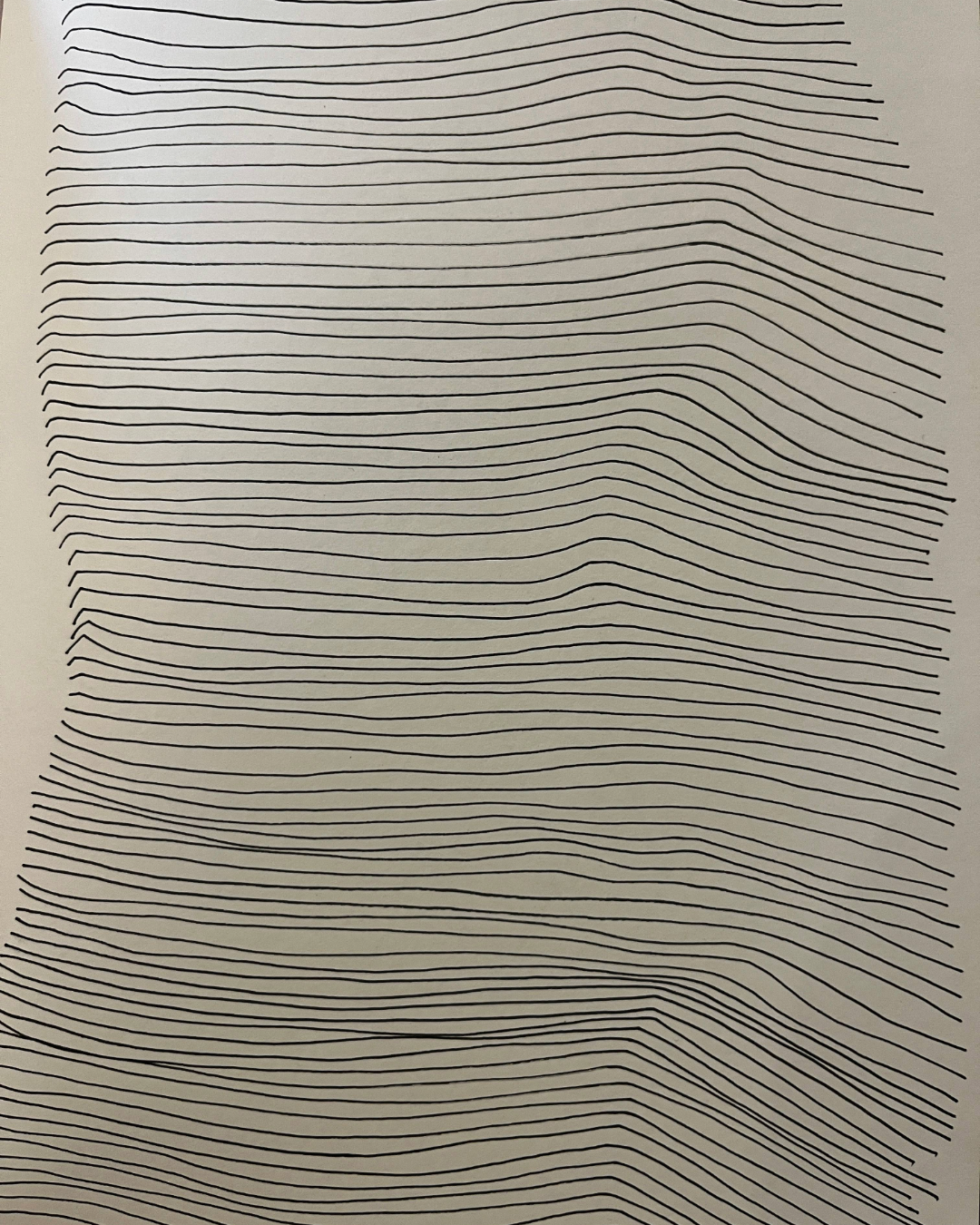
Breath drawing
This is a good exercise to begin with, as it helps to bring us in to the space.
Connect with your breath by taking a few deeper breaths, perhaps with your eyes closed. Feel where the breath is in your body. When you feel ready, see if you can draw your breath. There are many ways of doing this, but I suggest the following to get started:
- Draw a line for each exhale
- Follow the line of the breath with your pencil/pen
- Have a pencil and pen in each hand – draw up for an inhale and down for an exhale
After a while, you may forget about your breath, and just continue to draw in a rhythm.
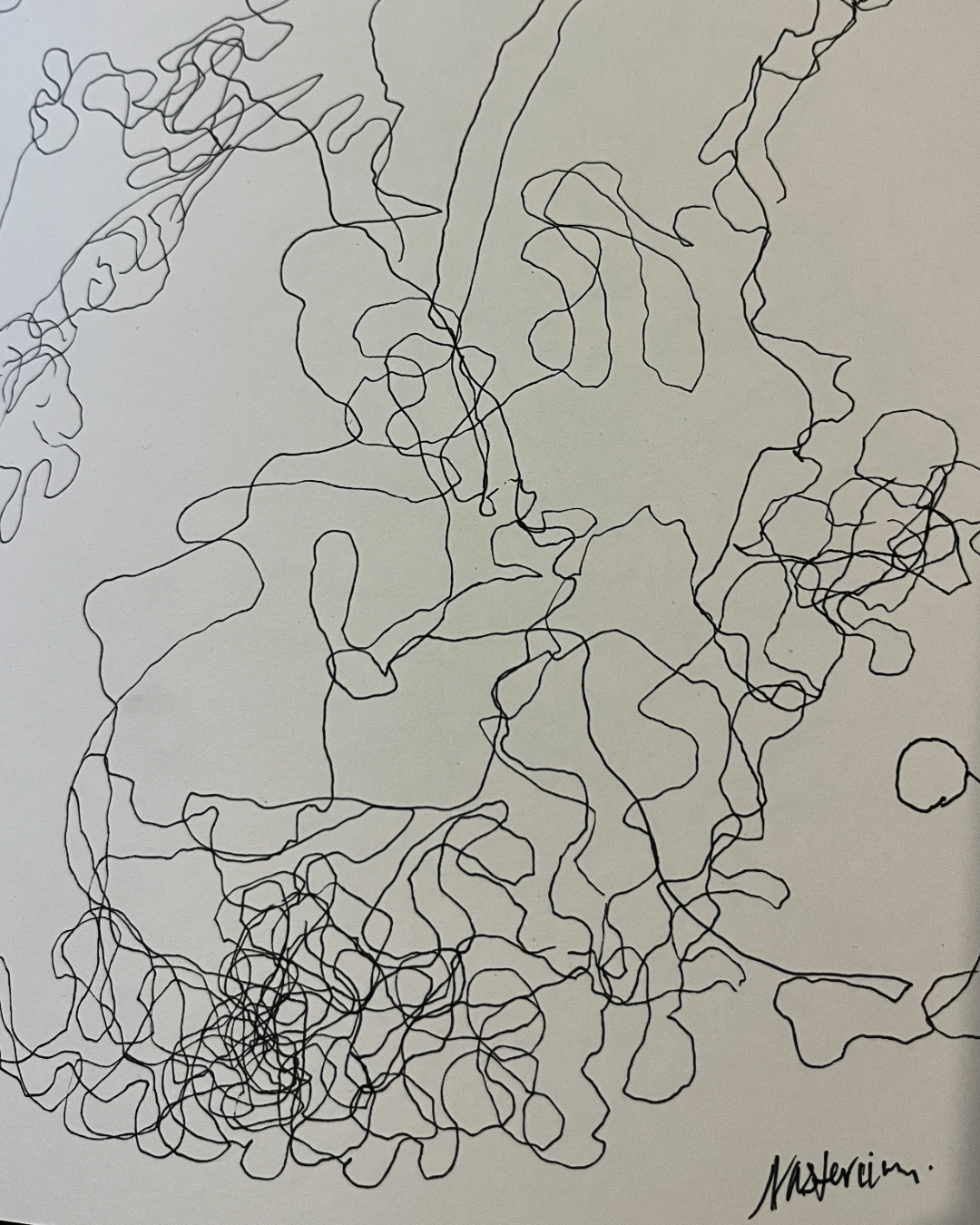
Pebble drawing
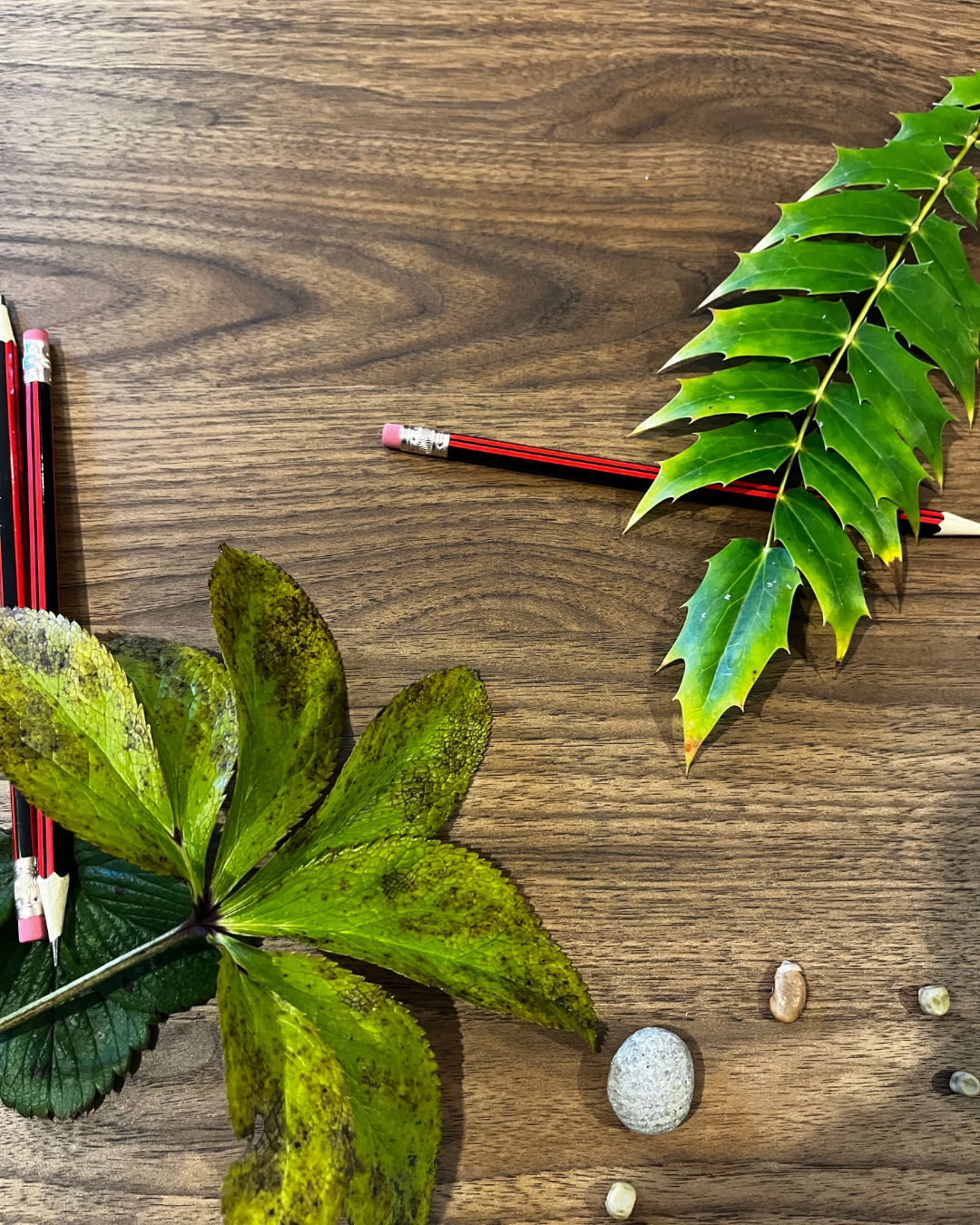
Choose a small stone (a seed/bean also works well for this.)
- Follow the stone with your pen/pencil.
- Keep the stone on the page but don't make any decisions about where it goes. Let it decide the way, and let your pen follow.
- You can do this multiple times on the same page, perhaps with different drawing tools.
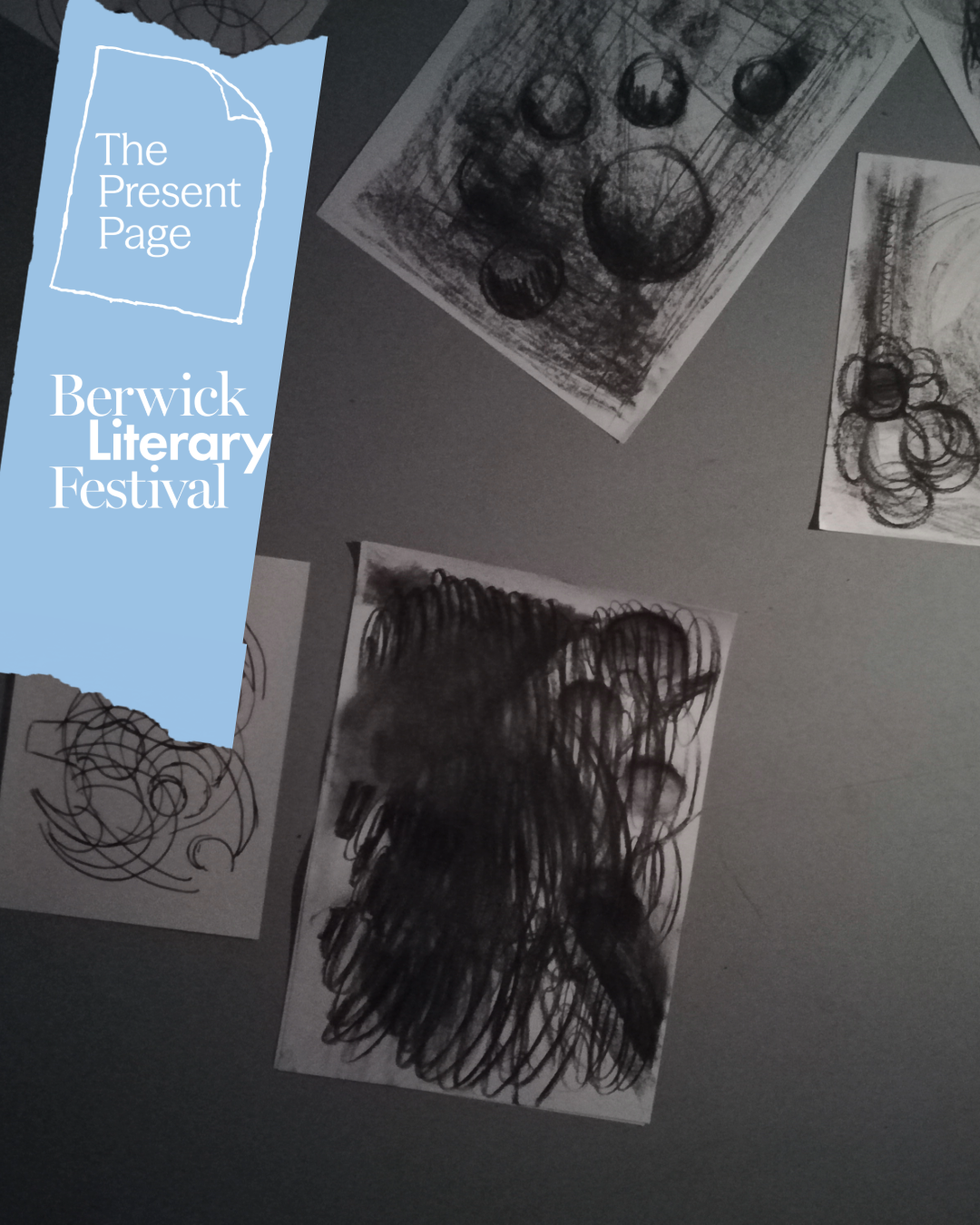
If you like, you can go into the drawing and add colour/pattern/shading.
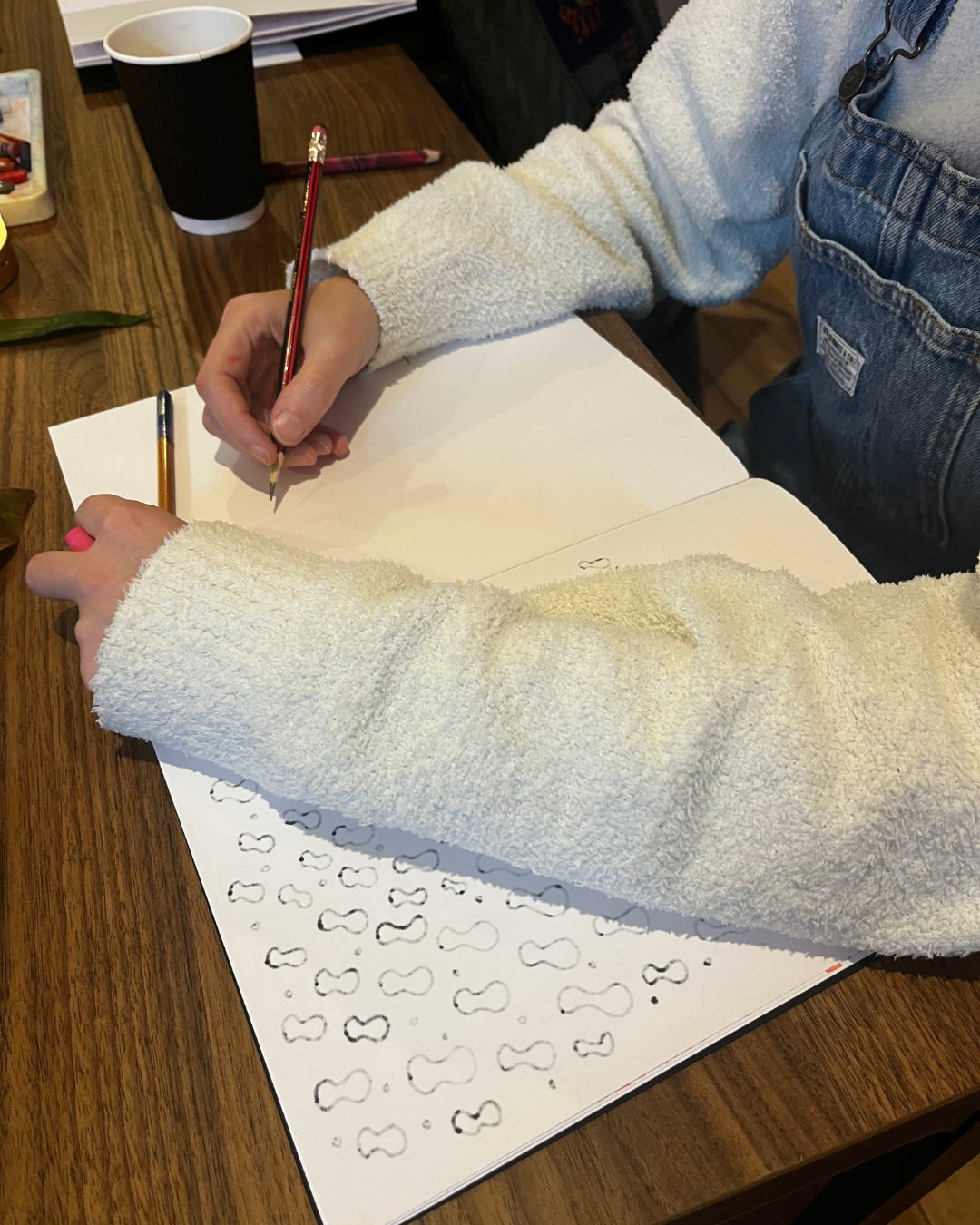
Repeated drawing
- Draw a line or a shape or a mark on the page.
- Copy it.
- Copy it again.
- Keep doing this.
- Keep going...!
Insect crawling drawing
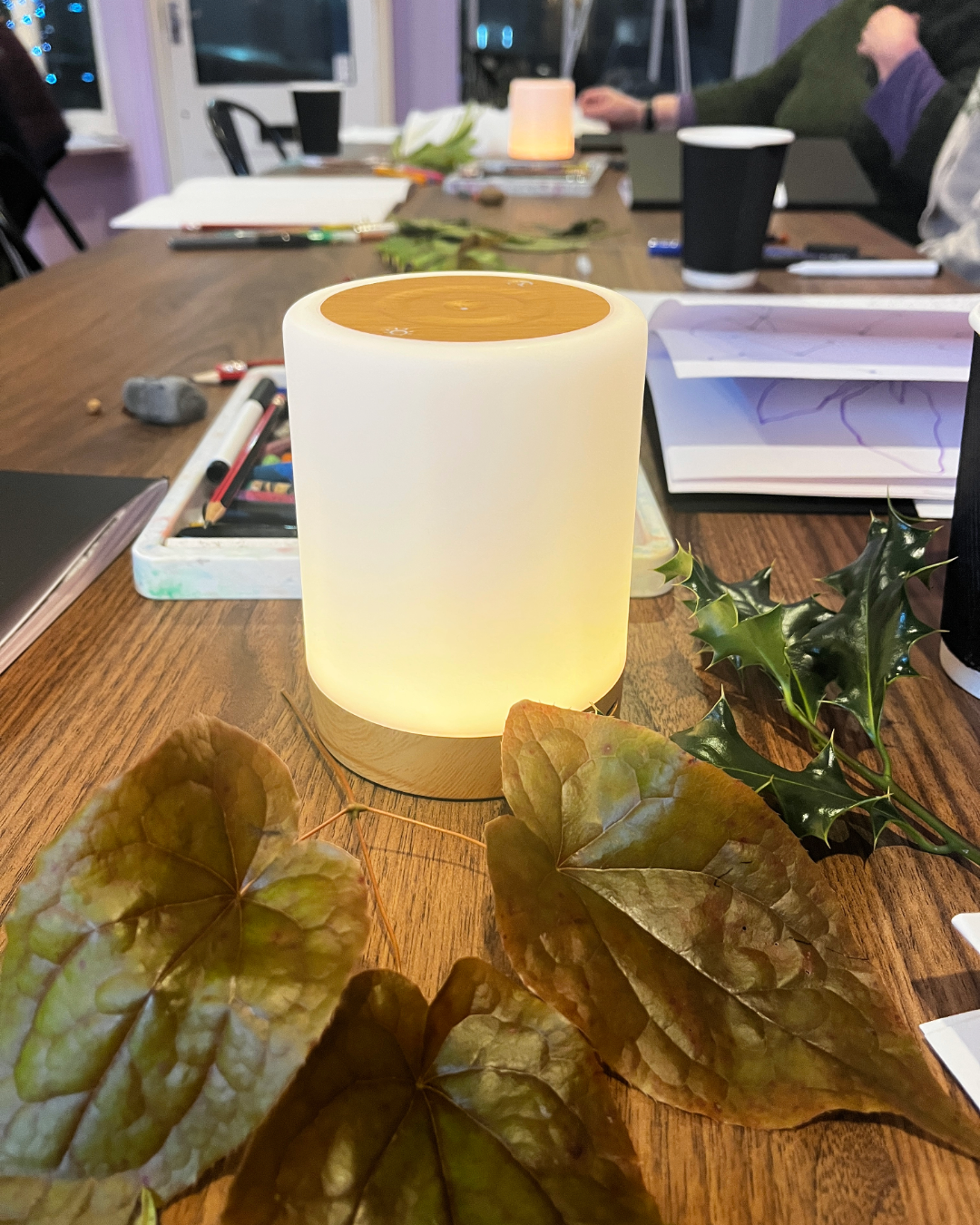
I like using leaves or natural objects for this exercise, but you could use anything! Kitchen implements also work well.
- Choose a leaf and imagine there is a tiny insect (an ant perhaps) crawling along the edge.
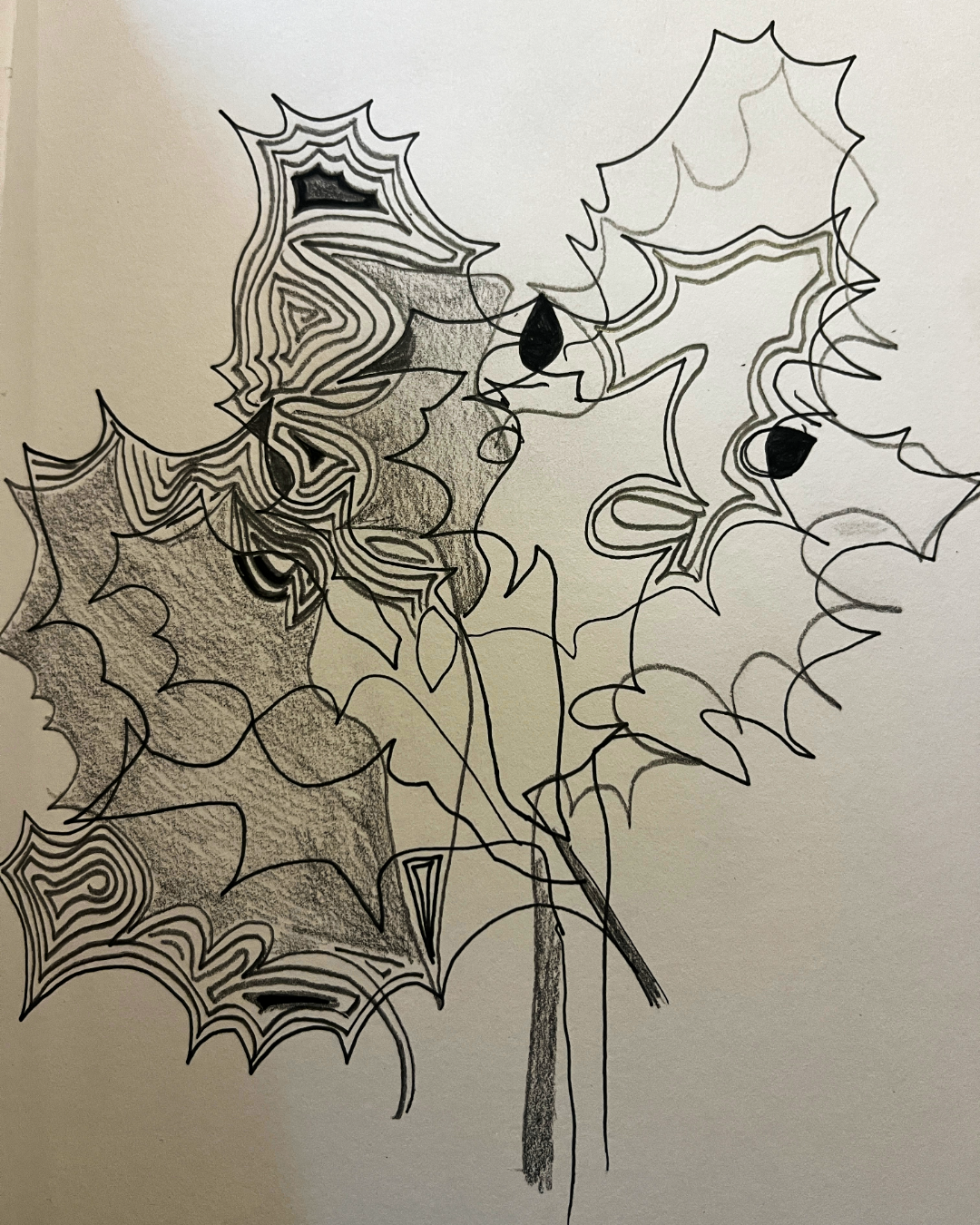
- Follow the ant with your eyes and draw the outline of the leaf without looking at your paper. Your pen/pencil shouldn't leave the page until you have finished.
- Change the position of the leaf and do it again over the top of the first drawing.
- Keep going.
- When you have drawn enough layers, you could go into the drawing and add pattern/colour/shading.
Shadow drawing
A similar exercise is to trace the shadow of an object that is falling on your page.
- Find some objects with interesting shapes. As above, leaves/natural forms/kitchen implements/tools all work well.
- Trace their shadows (you may have to adjust the lighting or use a torch to ensure you get a good shadow.)
- Work on several layers of shadow drawings.
- Go into the drawing and add pattern/colour/shading.
Dot & line drawing
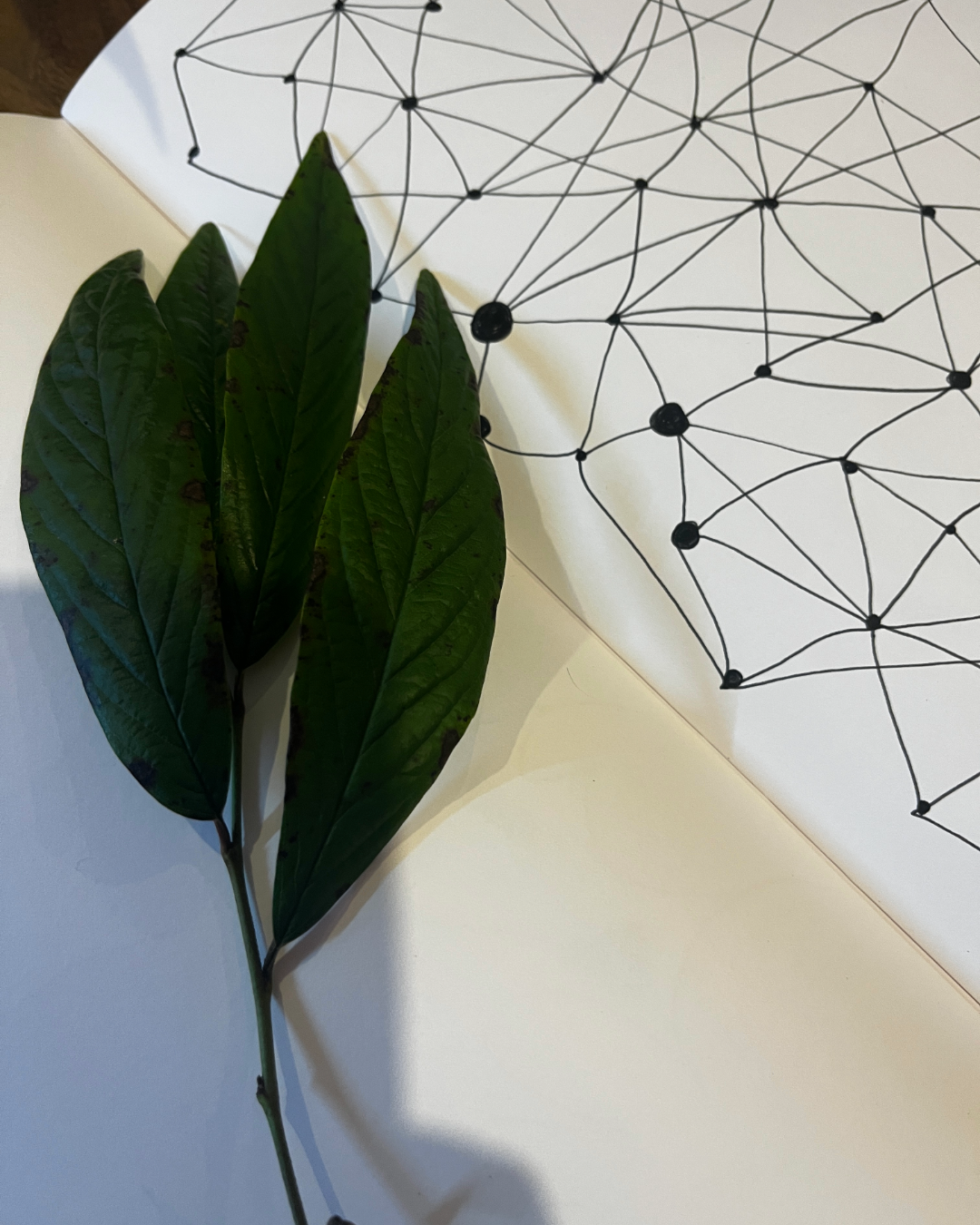
- Fill a page with dots
- Experiment with joining the dots with lines
Breath drawing to close
You may choose to close your practice with another breath drawing, as per the first exercise.
How is it different from you first one?
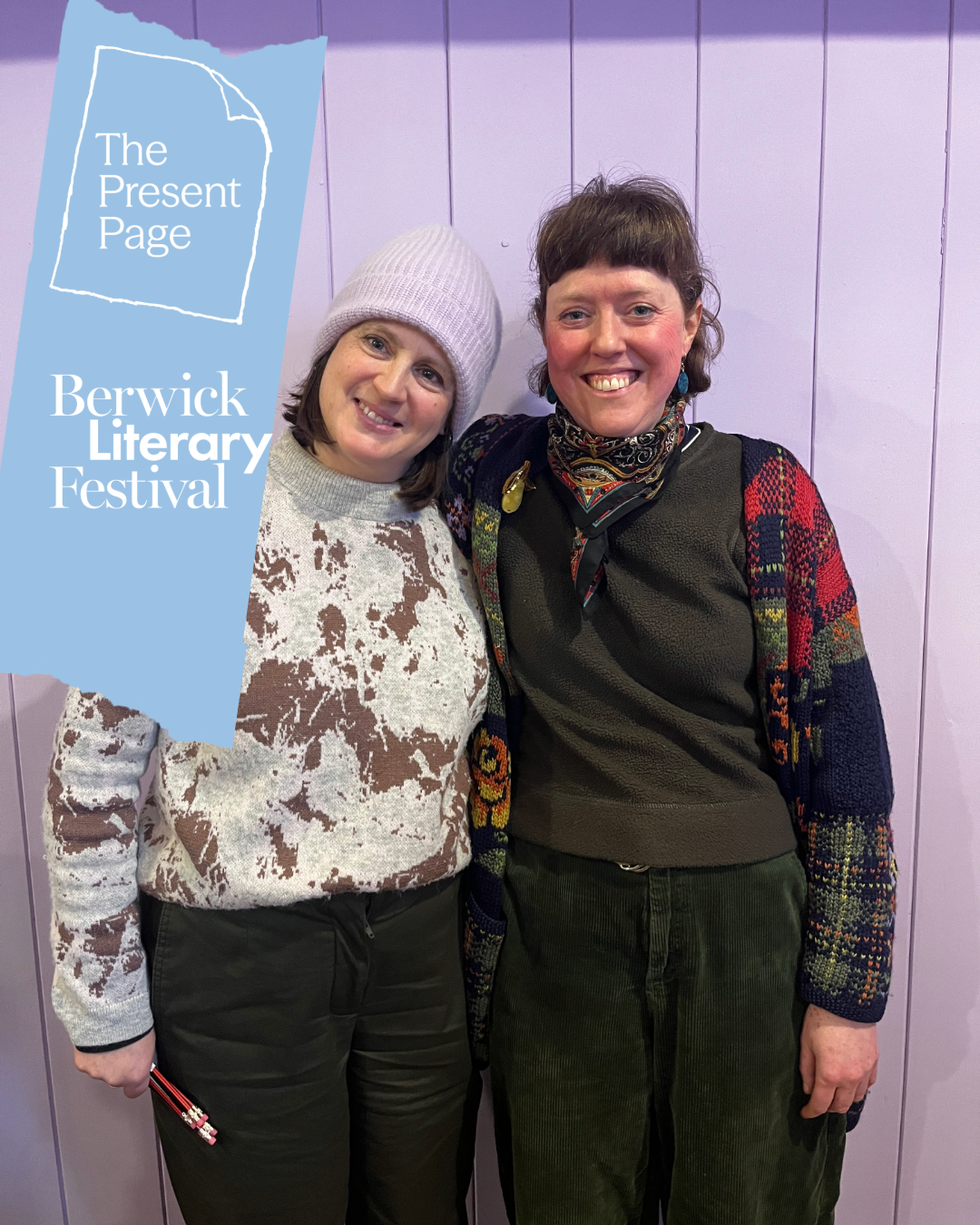
Kate Temple is a visual artist based just outside Edinburgh. She makes work across various media including drawing, collage, sculpture, installation, writing, and occasionally performance. Kate loves collaborating and regularly works on collaborative projects with other artists and non-artists.
If you've enjoyed our Present Page series, consider donating
The Present Page was created by Berwick Literary Festival and Anna Chapman Parker with funding from Create Berwick, Northumberland County Council and the North East Combined Authority, enabling us to offer these workshops free of charge.
If you've found this series enjoyable and would like to support more creative opportunities like this in Berwick and beyond, we'd be very grateful for a donation of any size.
Every contribution helps us develop new workshops, commission artists and writers, and create free resources that connect more people with stories and creativity.

