
Practice 1: Anna Chapman Parker, From Writing into Drawing
Welcome to the first practice in The Present Page.
In this session, artist and writer Anna Chapman Parker invites you to explore journalling as a gentle, everyday creative practice. Beginning with simple writing exercises and gradually moving into drawing, you'll discover how words, marks and observation can work together to help you slow down, notice more closely, and reflect on your experience.
There is no right or wrong way to approach these activities. Whether you write every day, have never kept a journal before, or don't think of yourself as someone who draws, this practice is simply an invitation to become curious about what happens when you spend a little time paying attention.
Watch Anna introduce the session
Introduction: Why journal?
Journalling is one of the most simple, accessible and unpressured creative activities you can do, fitting easily into everyday life whether you have five minutes or fifty, and taking up no more space than a slim volume on a shelf. For many of us, it’s a way of carving out a sense of private space, one that we can return to each time we open the covers of our notebook.
By producing something we can see on the page, journalling gives us a sense of agency and perspective. It can be as simple as writing a to-do list when things feel overwhelming. It’s a place in which we can order our thoughts, whether looking back reflectively over the day just passed, or forward into an imagined future we want to plan for. Over time, even small intervals of creative visioning or reflection like this, repeated frequently, can accumulate and build like compound interest: quietly strengthening our sense of clarity, emotional regulation, and wellbeing.
And it’s not just mental wellbeing that journalling can help. On a neurological level, writing engages the prefrontal cortex, helping us move into a more reasoned, reflective state while calming emotional distress centres such as the amygdala. Numerous studies have demonstrated the clear benefits of writing for those experiencing chronic pain, as well as reducing inflammation and other physical symptoms of stress in the body.
Motivations
Here are some of the reasons many people a drawn to journalling.
Which can you relate to?
- A place to think
- A container for a restless mind
- A way of keeping track of progress or development
- Can help you stay aligned with intentions / plans
- Allows you ‘to alchemize isolation into creative solitude’
- Aids organisation and productivity
- Doorway to writing practice or creativity more broadly
- Reduces stress – via sense that something is being ‘dealt with’ or at least acknowledged
- Activates reason & self-regulation (pre-frontal cortex)
- Calms emotional distress (amygdala)
- Can help reduce pain in chronic conditions
Can you think of any other motivations of your own to add here?
Approaches to journalling
Ask any child coming home from school ‘how was your day?’, and you’re unlikely to get an informative or coherent answer. Selecting from the myriad impressions, experiences and emotions to give a succinct summary can simply be overwhelming. And it can feel a bit the same for us as adults, when picking up a diary. Faced with all that you’ve experienced that day, and with the complex weather system of feelings in your mind and body, how do you even begin to articulate what’s going on?
Many journalling practices have evolved as a way of providing a structure or focus for the journalling impulse, making it feel more approachable. Some of these differ from traditional diary-like narratives to hone in on specifics. Take a look at the approaches below, and decide which you might like to try.
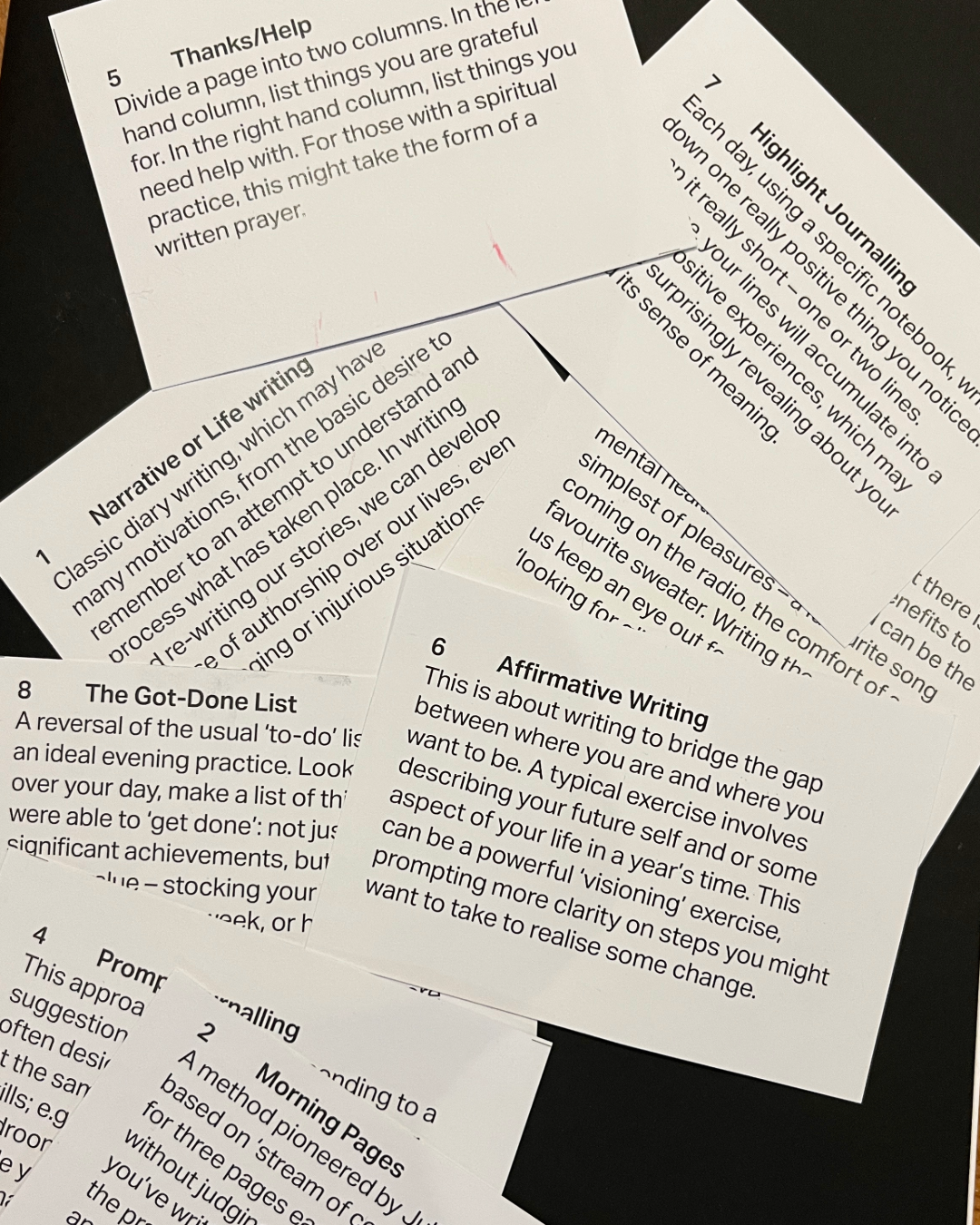
1 Narrative or Life writing
Classic diary writing, which may have many motivations, from the basic desire to remember to an attempt to understand and process what has taken place. In writing and re-writing our stories, we can develop a sense of authorship over our lives, even in challenging or injurious situations.
2 Morning Pages
A method pioneered by Julia Cameron, based on ‘stream of consciousness’ writing for three pages each morning. Writing without judging yourself or reading what you’ve written is key. AKA ‘brain-dumping’, the practice helps you clear mental clutter and develop more awareness of your preoccupations, which in turn can nourish your creativity.
3 Gratitude Journalling
It may have become a cliché, but there is huge evidence to support its benefits to mental health. What you record can be the simplest of pleasures – a favourite song coming on the radio, the comfort of a favourite sweater. Writing them down helps us keep an eye out for the positive – AKA ‘looking for glimmers’.
4 Prompt journalling
This approach involves responding to a suggestion or idea from another writer, often designed to encourage self-enquiry at the same time as developing writing skills; e.g. ‘describe your childhood bedroom’ or ‘write about something that made you laugh recently’. Books, websites and mailing lists can provide the prompts.
5 Thanks/Help
Divide a page into two columns. In the left hand column, list things you are grateful for. In the right hand column, list things you need help with. For those with a spiritual practice, this might take the form of a written prayer.
6 Affirmative Writing
This is about writing to bridge the gap between where you are and where you want to be. A typical exercise involves describing your future self and or some aspect of your life in a year’s time. This can be a powerful ‘visioning’ exercise, prompting more clarity on steps you might want to take to realise some change.
7 Highlight Journalling
Each day, using a specific notebook, write down one really positive thing you noticed. Keep it really short – one or two lines. Over time, your lines will accumulate into a trove of positive experiences, which may become surprisingly revealing about your life and its sense of meaning.
8 The Got-Done List
A reversal of the usual ‘to-do’ list, this is an ideal evening practice. Looking back over your day, make a list of things you were able to ‘get done’: not just work or significant achievements, but actions of simple value – stocking your fridge with good food for the week, or having a chat with a friend that made you laugh. This practice can encourage us to look more generously at ourselves and our lives.
Starting to write
Now that we’ve had a look at motivations and methods of journalling, let’s start by trying one very simple but quietly powerful approach: The Got Done List.
Try this practice in the evening, towards the end of your day. Whatever kind of day you’ve had, it will have encompassed an almost uncountable number of actions: ‘productive’ things like work accomplishments or household tasks; acts of care for yourself or family member; but also just simple actions that enrich your life, like taking a walk, having a chat at the bus stop or watching a favourite TV show.
Begin at the top of a new page with the first thing you got done today, and start to list the things you did as the day progressed. Try to look back on your day with the most generous eye that you can, so you’re viewing yourself with real care, noticing the value in all that you did. Remember this isn’t about conventional productivity; your list might include things like ‘made myself a great sandwich’ and ‘took a nap’.
When you have finished, look back over what you’ve written. Notice how you feel, looking at your list. Are you surprised by how much you did? Did writing your actions down shift, even in a subtle way, how you might value or appreciate them?
Moving into drawing...
Drawing where you are
This workshop is called from writing into drawing. So why bring drawing into your journalling practice?
In one sense, drawing can come into a journal quite naturally, perhaps in the form of small sketches, or even just doodles in the margin. Or it might be a more significant part of a journal, as it was for Frida Kahlo in the diaries she kept over the last ten years of her life. For some of us, making drawings might feel quite separate from a passage of writing; for others, like Kahlo, drawing and writing are part of one organic outpouring of self-expression. Your approach can be unique to you, and might vary, of course, from day-to-day.
If you’re fairly new to drawing in a journal, you might like to begin by making a rough sketch of where you are. Focusing on the desk or surface in front of you, draw the outlines of a notebook and pen, your cup of coffee or any other objects close by. Don’t worry about composition or scale or accuracy, just start with one object and go from there. Try to look at the objects you’re drawing almost all of the time, only glancing at your drawing very briefly to check where you are on the page. Concentrate on the particularities of each shape – don’t worry about tone or colour – and enjoy the feeling of the marks you’re making as you follow their contours with your pen. Re-draw each shape as many times as you need to, to get an approximate rendering of what you see.
Alternatively, if you are sitting by a window (at home, on a train or in a cafe) try drawing some elements of your view: scribbled shapes of trees seen in the distance, zig-zags of the roof-scape opposite, or blurry lines of passersby. Don’t worry about capturing a complete scene – just enjoy a quick sketch that sets down something in that complexity, and registers where you are. Again, try to look almost all the time at your view, just stealing quick glances at your drawing when you need to.
Now sit back and look at what you drew, not with a technically criticial eye, but with a sense of curiosity: how did that feel?
How drawing can help
- Drawing your view in one of these ways is a great way of bringing you into the journalling ‘space’, helping you feel mentally and physically present or grounded.
- It can also be helpful when confronted with the blank page and that ‘where to start?’ feeling.
- Having sketches in your journal can make the experience of journalling (and places you’ve been) more memorable
- Flicking back through the pages, you’ll get snippets of memories at a glance, before you’ve even read anything. It can be encouraging to look back and see visual evidence of yourself being there.
- Drawing really helps you occupy the here and now, not least because the basic difficulty of translating what you see onto the page can fully occupy the mind. Drawing can offer a kind of immersive experience, sometimes known as ‘flow’.
Between writing & drawing
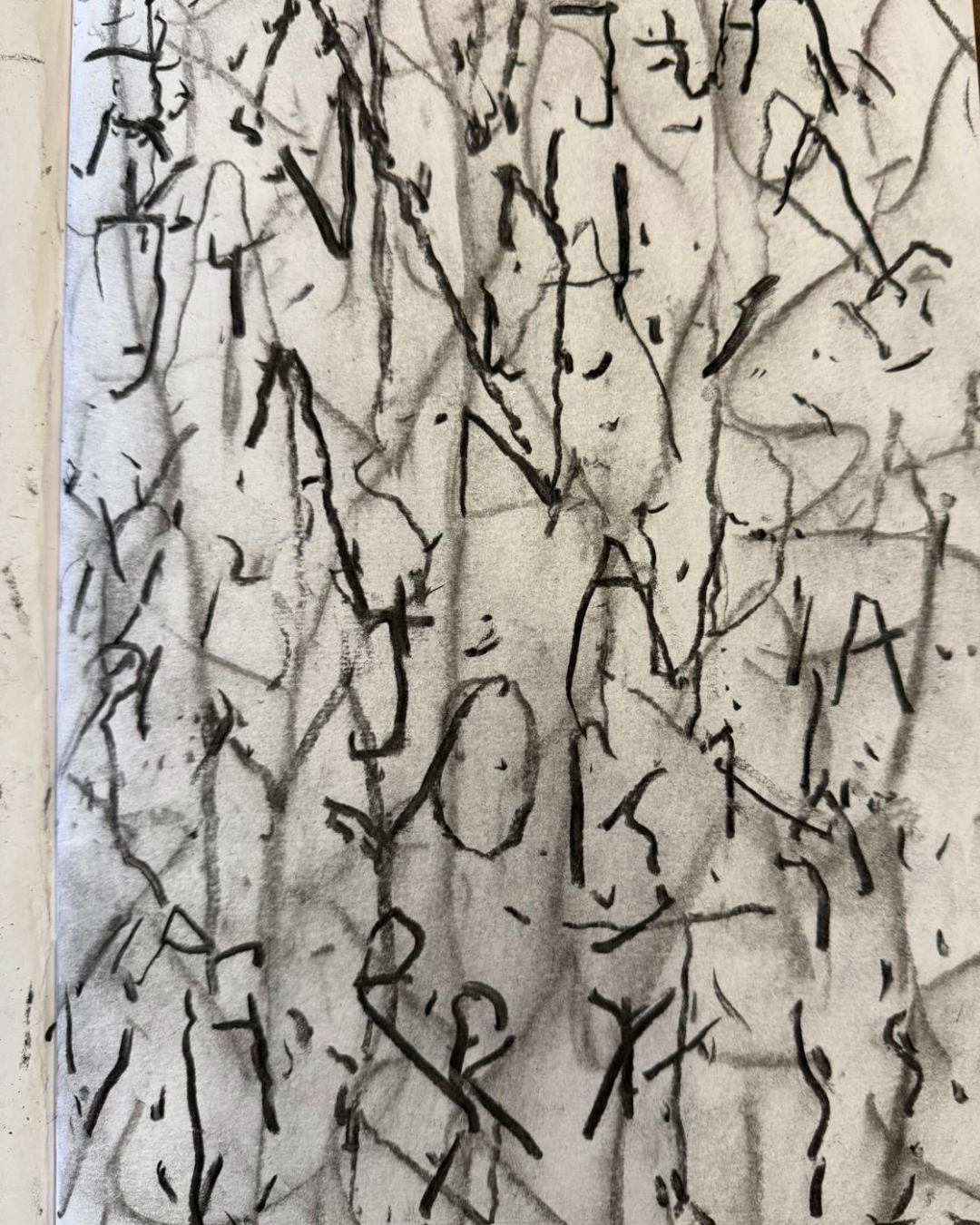
Of course, drawing isn’t just about recording what we see. Drawing is very close to writing, and many artists have explored the practice as a way of using the forms and gestures of writing but going beyond words. This is sometimes known as asemic text, i.e. creating text which can’t be read. The poet, writer and artist Henri Michaux described his motives for working in this way quite beautifully: ‘I wanted to draw the moments that, end to end, make up life, to make visible the interior sentence, the sentence without words’.
So let’s try a drawing exercise now which plays with that idea of drawing the interior sentence.
- Choose one phrase from a passage of your journalling. It might be a phrase from your Got Done List, describing an action you like, or something you’d like to question or affirm, or any phrase that feels interesting or resonant to you.
- Take a clean page, and hold your pencil or pen loosely, nearer to the top than you usually would. Play with the angle and pressure of your grip so that the lines you make are looser and less controlled that they are for writing. It can help to hold the pen at a relatively upright/vertical angle.
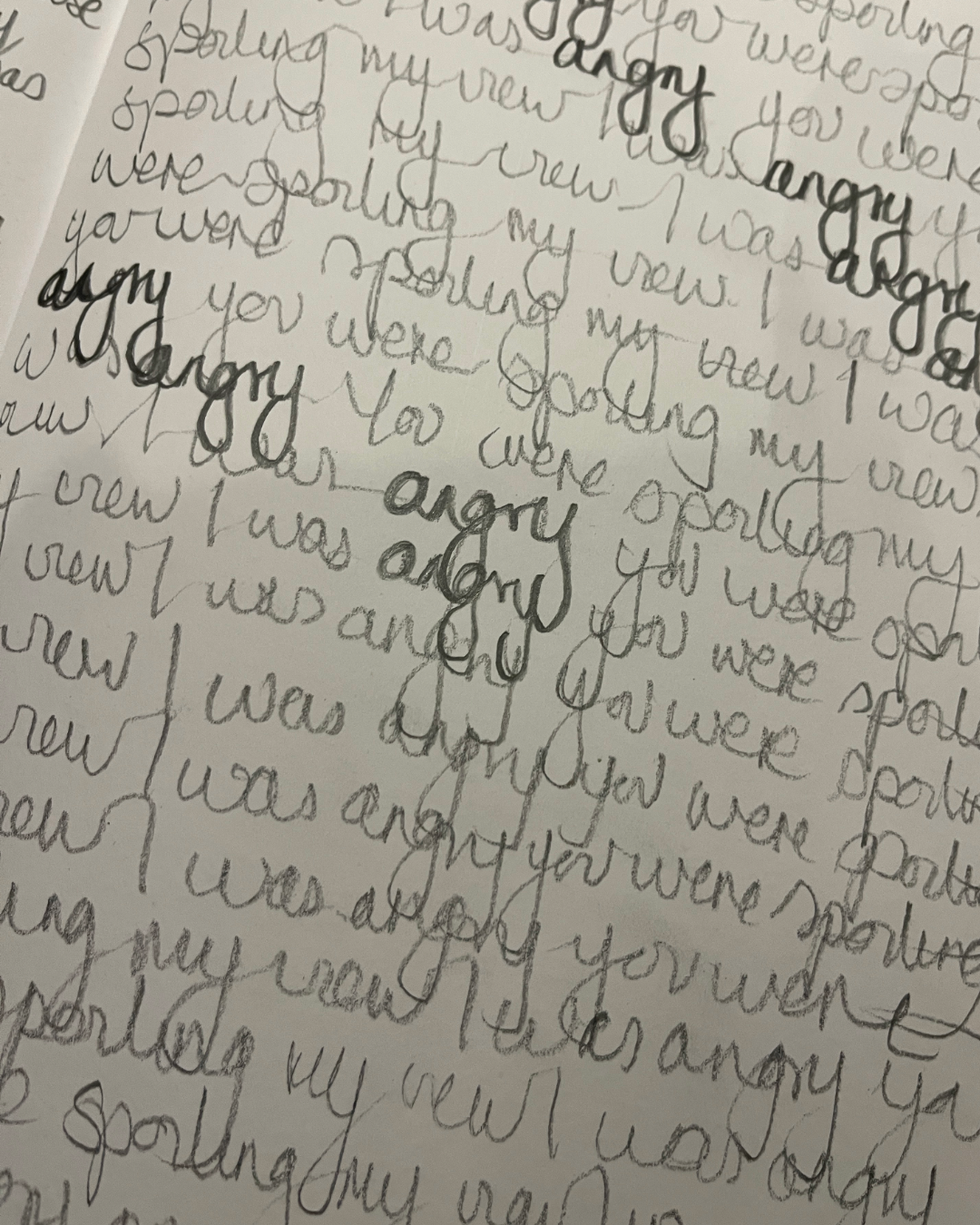
- Begin to write your phrase in a loose, flowing script, larger than you usually write, allowing the relative lack of control in your grip to take effect. Continue without taking the pen off the page, so that your writing becomes more about rhythm and flow and less about accurate, distinct or legible words. Write in cursive, joining up each word and repeating the phrase again and again, ignoring breaks in the line, so that you are filling the whole page with an endless stream of more-or-less asemic ‘text’.
- How loose or controlled you allow your writing to be is of course up to you; you may prefer to keep it vaguely legible, or instead allow your pencil to let go of recognisable letters altogether, so that it becomes a texture of writing rather than distinct words.
- You might want to keep a consistent scale and horizontality so that the lines progress evenly, or you might feel like getting a bit looser and wilder as you go. Maybe the sound of the pencil on the paper can be a rhythmic guide that keeps you going.
- When you reach the bottom of the page, pause and consider, does that look interesting and enough, do you want to continue, either overlaying it, or repeating the process in the spaces between the lines?
- When you’re ready to stop, take a step back and look at your asemic text/drawing. What might it ‘say’ about the phrase you began with? Could asemic writing be a way of looking more dispassionately at something you might have observed? Could it offer a way of creating some space, or playful curiosity, between us and our thoughts?
A Context for your work
If you’d like to explore the relationship between drawing and journalling further, you might like to look up some of the following artists who have worked in this way.
Drawing as (part of) diaristic practice:
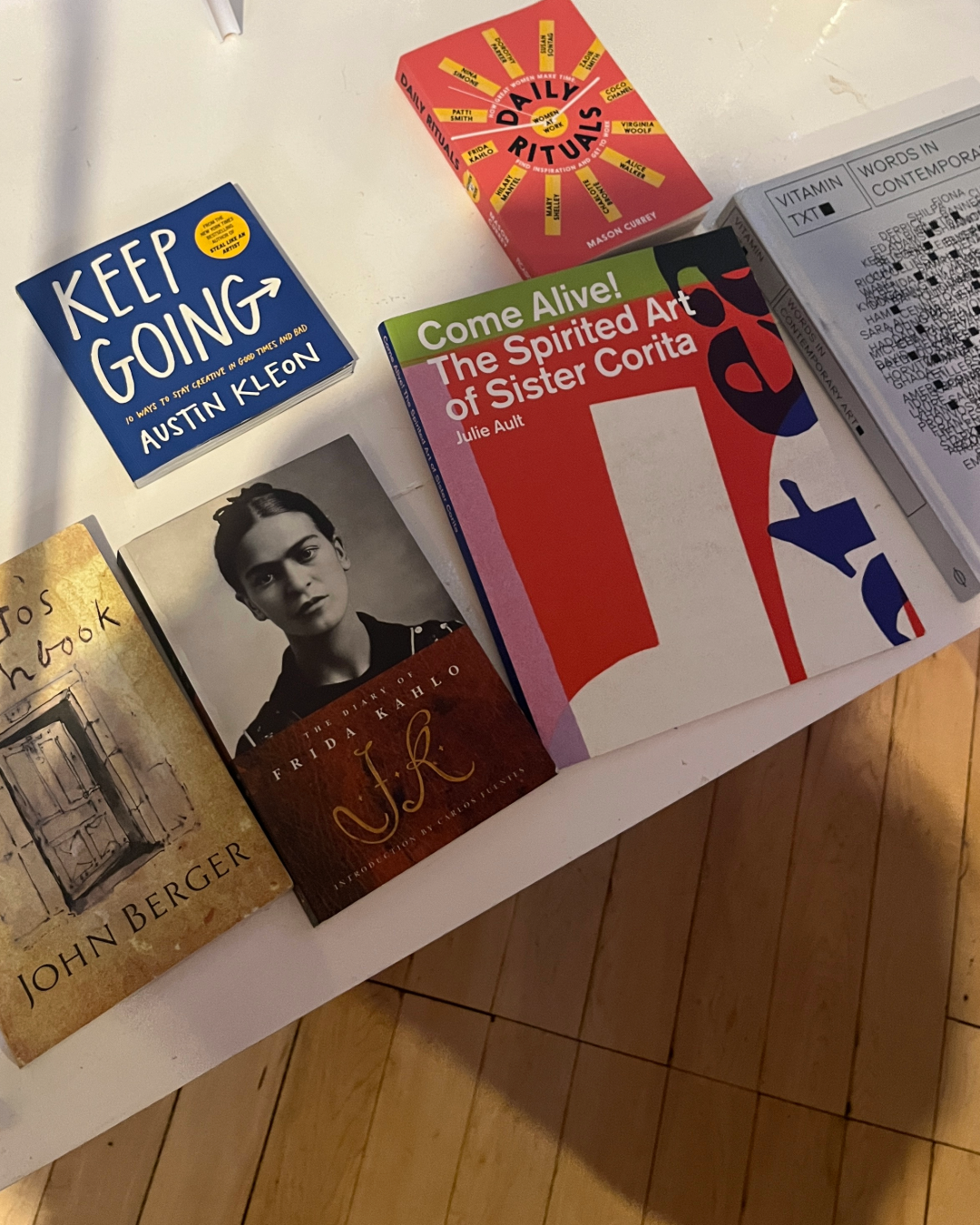
Frida Kahlo, diaries (1944-54)
Jean-Michel Basquiat’s notebooks, 1980s
Keith Haring, diaries/drawings
John Berger, books including Bento’s Sketchbook, 2011
Tracey Emin, diaristic fragments in drawings/paintings
Do Ho Suh, e.g. Rubbing/Loving Project, 2014–23
Austin Kleon, notebooks
Asemic writing in Artworks:
Paul Klee e.g. Beginning of a Poem, 1938
Henri Michaux drawings, 1960s
Mira Schendel e.g. Objetos gráficos, 1970s
Cy Twombly, paintings/drawings
Mirtha Dermisache e.g. Text, 1974 / Libro No.1, 1972
Glen Ligon e.g. Debris Field series, 2018
Cui Fei e.g. Manuscript of Nature, 2016
Roni Horn e.g. Hack Wit series, 2014
Making it happen
We hope you have enjoyed this workshop. If you’re keen to make journalling a more regular part of your life, here are some tips to help make it happen.
- Take a step back and think about your energy levels during a typical day, as well as your pockets of spare time: where might you find space for creativity? Having a default place and time to journal can make it more likely to happen.
- Set yourself up with a designated book and pen and keep them in the same place so you can find them immediately. If possible keep them handy for where you’ll be at your chosen time (e.g. by your bed if it’s first thing in the morning / bedtime).
- Put off by ‘the blank page’? Start a list of ‘drawing ideas’ or ‘writing prompts’ which you can glance at if energy or inspiration are sparse. These could be slipped into the back of your notebook.
- Make it cosy: consider having an accompanying ritual that helps you move into a more settled, ‘caring for yourself’ mindset – e.g. making a coffee, lighting a candle, grabbing a blanket etc.
- If you’re exhausted and unmotivated but still want to do something, try having a really low minimum – e.g. doing a basic ‘got done’ list, or ‘3 things to appreciate today’.
- Fear of failure or background anxiety getting in the way? Try setting a timer for just 3 minutes, or aiming to fill 2 pages, and writing stream-of-consciousness style whatever comes into your head, without judgement or re-reading.
Further reading
For more encouragement and inspiration, check out some of the following:
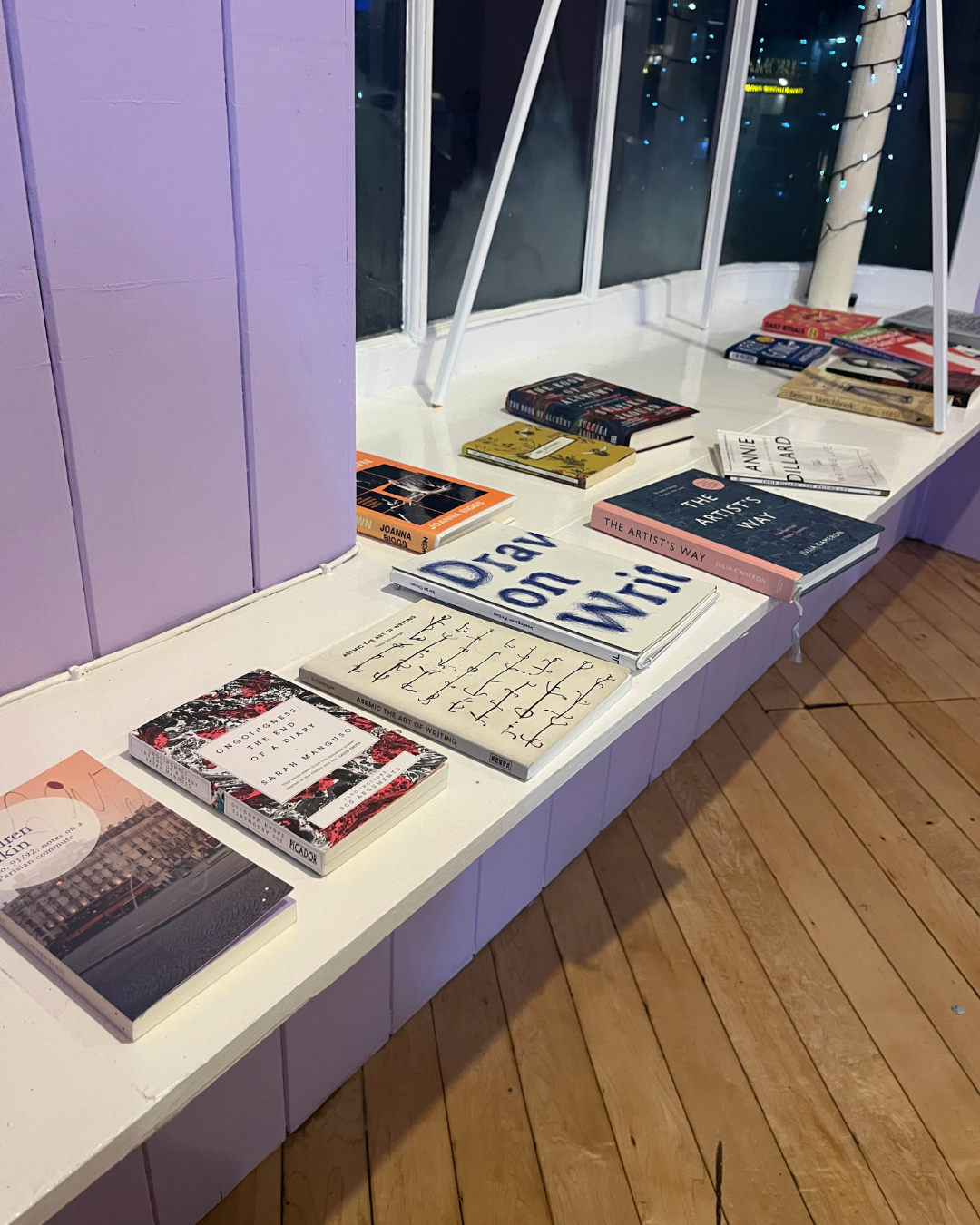
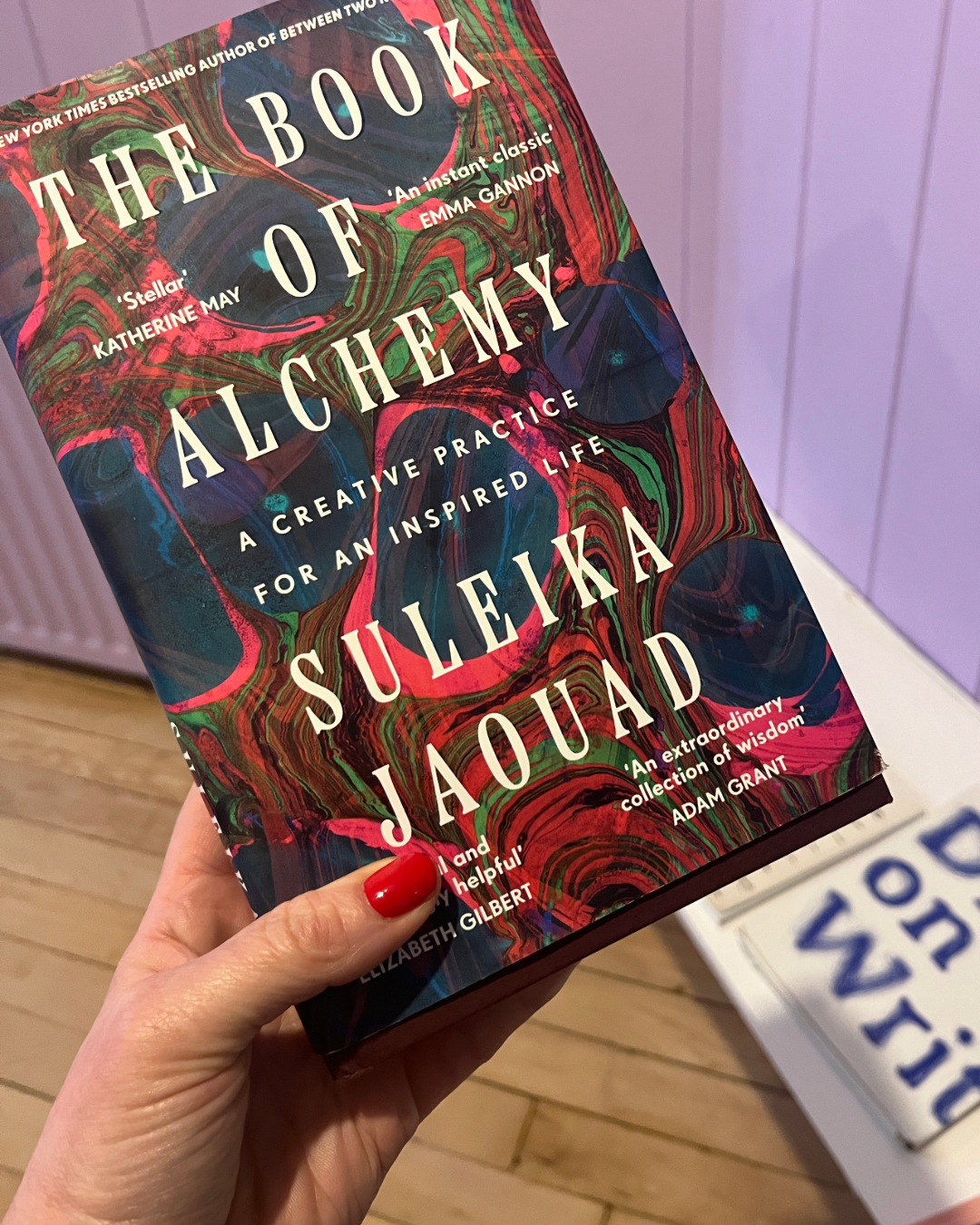
The Book of Alchemy: A Creative Practice for an Inspired Life by Suleika Jaouad
Keep Going by Austin Kleon
The Artist’s Way by Julia Cameron
The Assassin’s Cloak: An Anthology of the World’s Greatest
Diarists by Irene & Alan Taylor
The Writing Life by Annie Dillard
Anna Chapman Parker is an artist and writer (UK) whose work explores relationships between drawing, writing, body and place. A key interest is in acts of observation as experienced within the increasingly mediated culture of the attention economy. She works with a range of materials and methods, from ink drawing to digital media, often navigating ambiguous boundaries between the drawn and the written line. Her first book, Understorey, is published by Duckworth Books (2025).
Annachapman.co.uk | @annachapmanparker
If you've enjoyed our Present Page series, consider donating
The Present Page was created by Berwick Literary Festival and Anna Chapman Parker with funding from Create Berwick, Northumberland County Council and the North East Combined Authority, enabling us to offer these workshops free of charge.
If you've found this series enjoyable and would like to support more creative opportunities like this in Berwick and beyond, we'd be very grateful for a donation of any size.
Every contribution helps us develop new workshops, commission artists and writers, and create free resources that connect more people with stories and creativity.

